Once the 1970s really took effect, custom vans became all the rage. Bubble windows, deep shag carpeting speckled with wacky-tabacky seeds, wood-burning stoves, 8-track players, lava lamps, black-light art on velvet, and wild exterior murals all became de rigeur in the vanning world. It wasn’t long before a slightly less red-eyed and more family-oriented variation on the custom van theme hit the mainstream: the conversion van. Shops would start with the cargo version of a factory-fresh Detroit van and outfit it with big windows and accessories to make long road trips and camping stops more comfortable. Naturally, the early conversion vans still had something of a disreputable air about them, and that whiff of degeneracy still hovers about this 1978 3/4-ton Chevy Van that I spotted in a Denver-area self-service car graveyard recently.
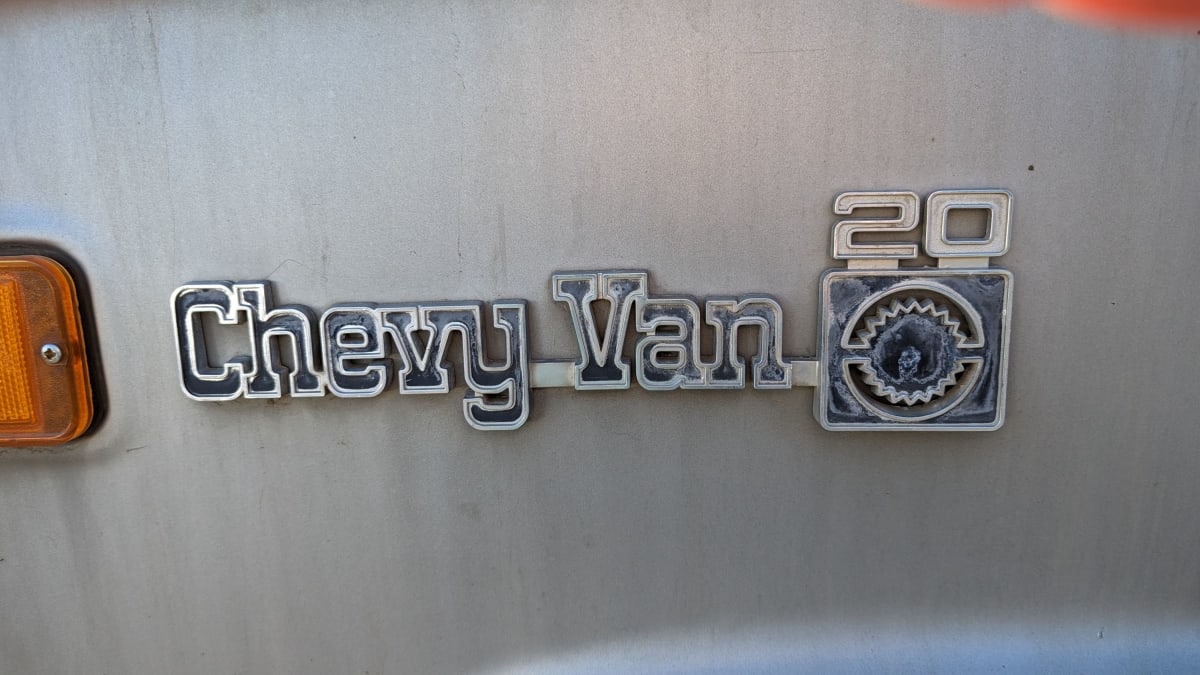
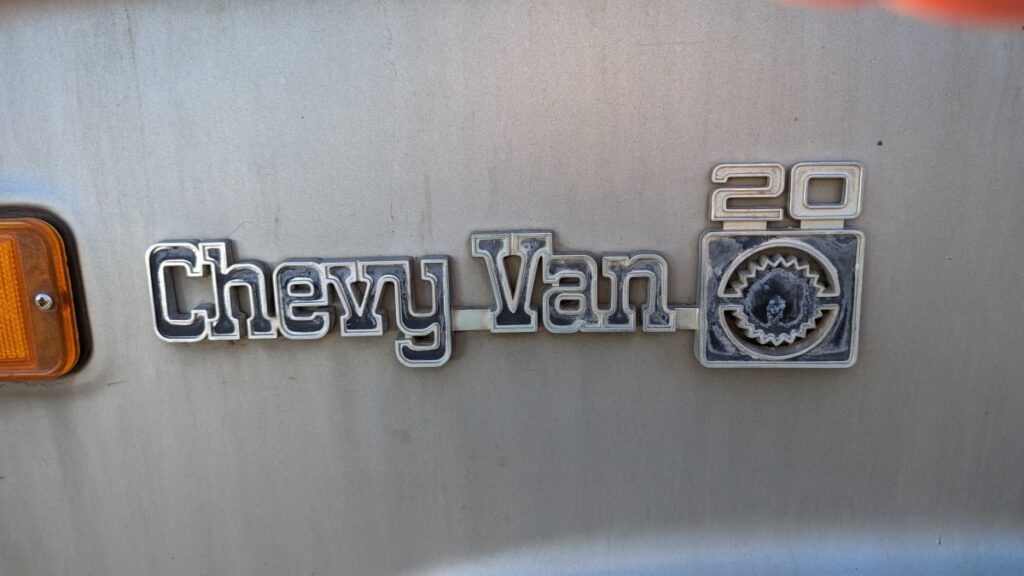
This generation of full-sized G-Series van was built by General Motors from the 1971 through 1996 model years, going through some name changes in the process. In 1978, the GMC-badged versions of the G-Series were known as the Vandura (cargo) and Rally (passenger), while the Chevrolet-badged vans were the Chevy Van (cargo) and Sportvan (passenger). Ford used a similar naming system, with passenger vans called Club Wagons and cargo vans called Econolines; Chrysler offered the Dodge Tradesman cargo van, the Dodge Sportsman passenger van, plus Plymouth Voyager-badged counterparts.

Such vans catch my eye when I spy them in junkyards, because much of my 1970s childhood was spent riding in a red-and-white 1973 Chevrolet Beauville Sportvan (which my parents bought new at Suburban Chevrolet in Minnesota and which stayed in the family long enough for me to crash it as a teenager).
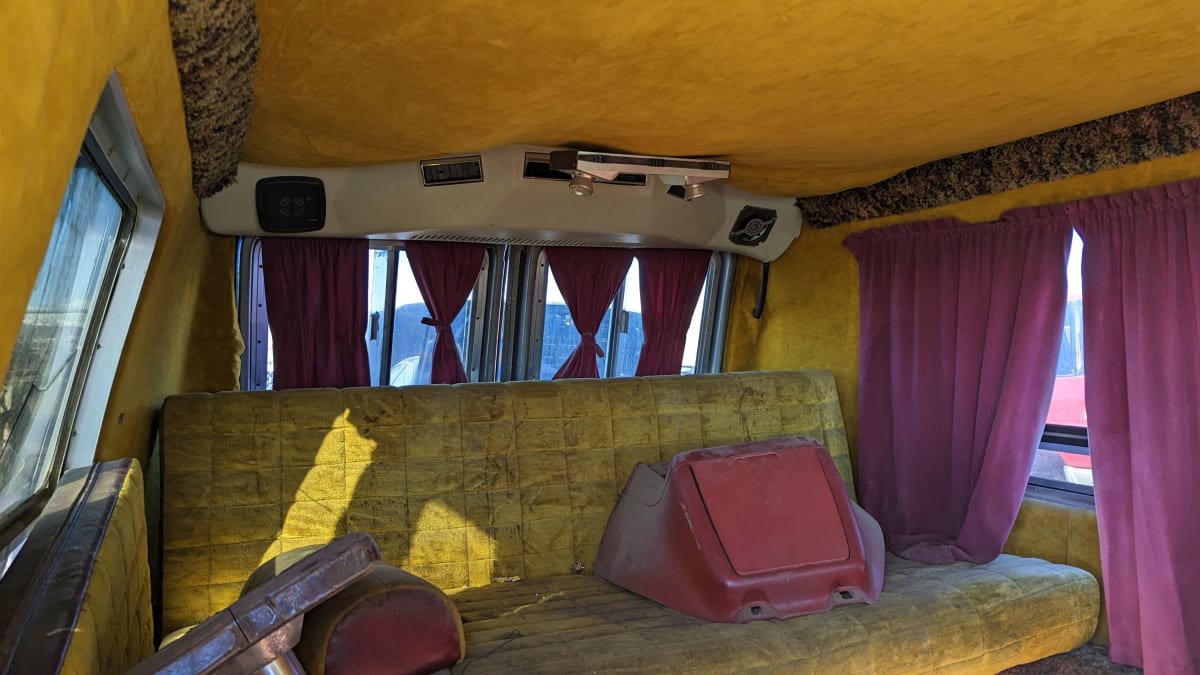
This van appears to be a proper non-backyard conversion, but the interior still seems a perfect environment for the scent of Acapulco Gold and the strains of Nazareth blasting from the Realistic quadrophonic audio system.
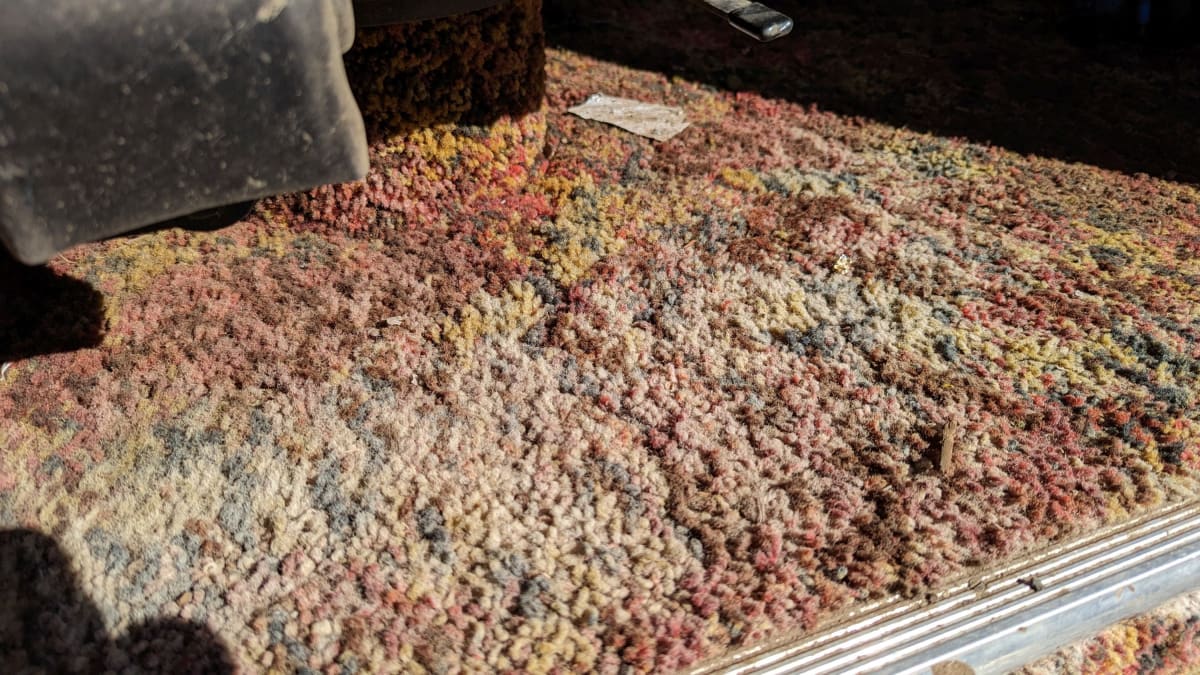
Is there shag carpeting? You know it! If this van could talk, it would have some good stories to tell.
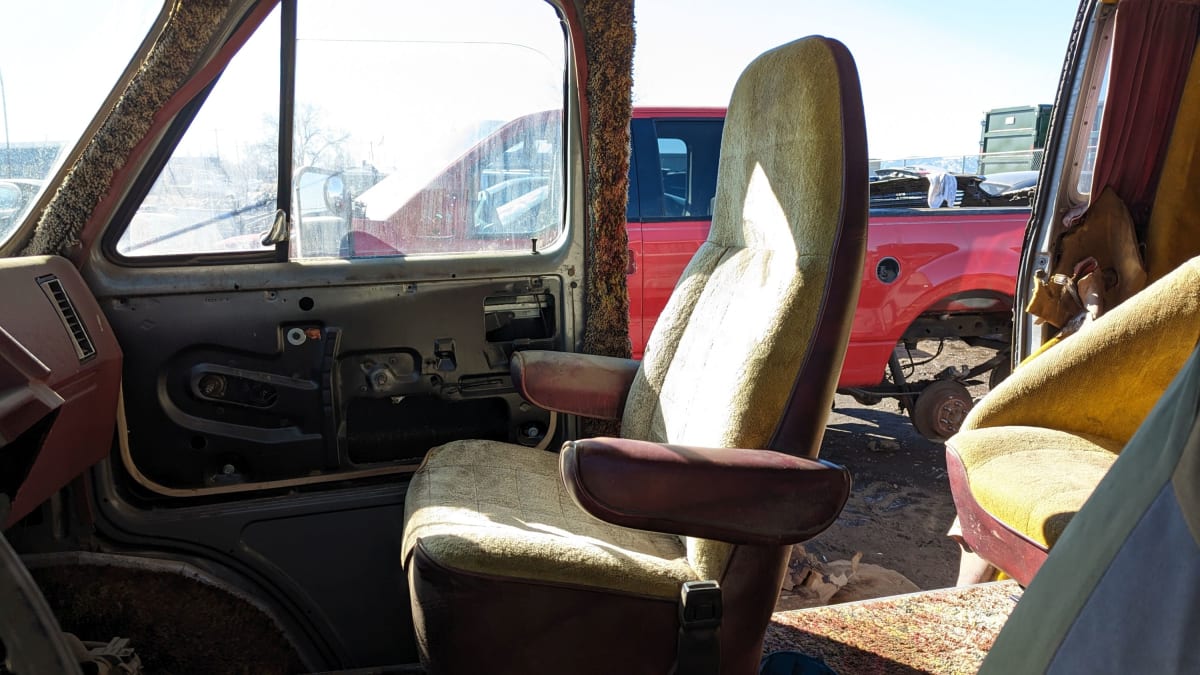
Naturally, the velour-upholstered captain’s chairs in front are on swivel mounts.
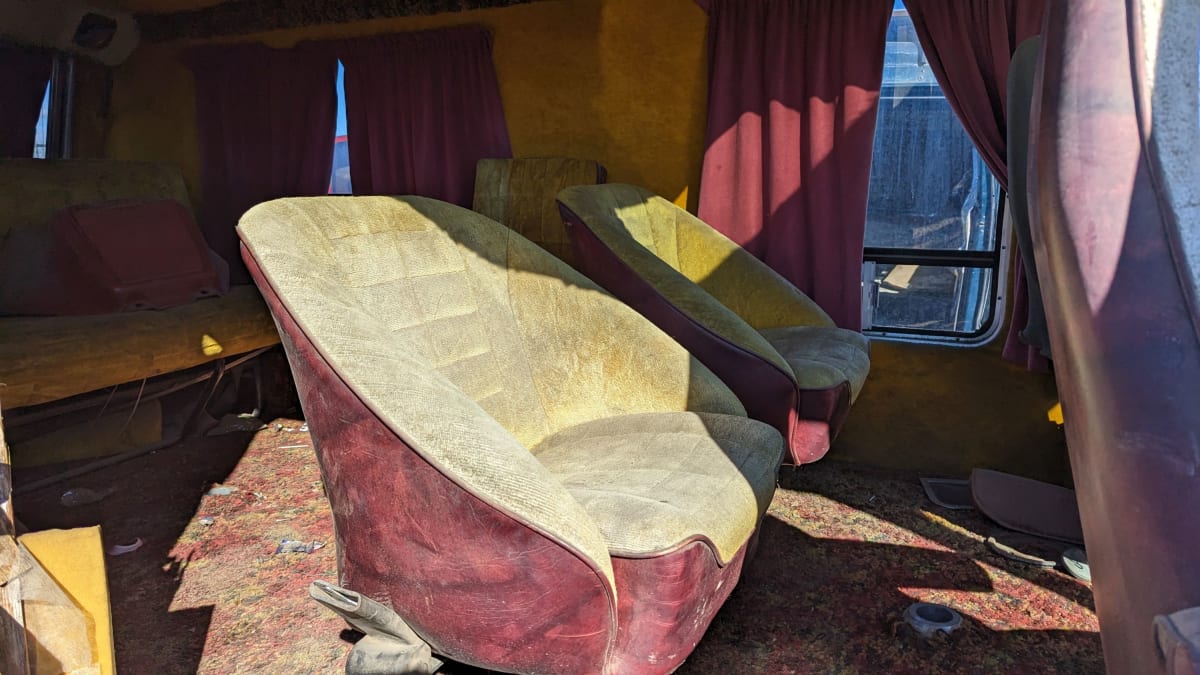
For the passengers in back, these cozy swivel buckets were available.
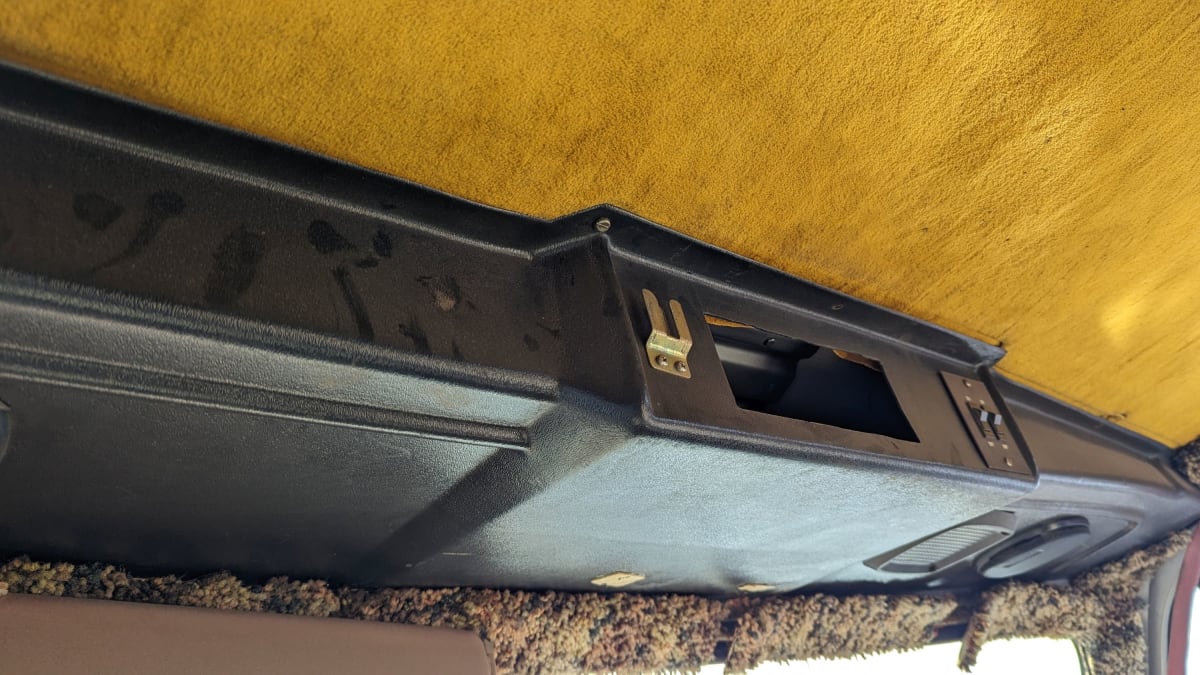
The microphone clip tells us that this van was equipped with a CB radio, as was correct.
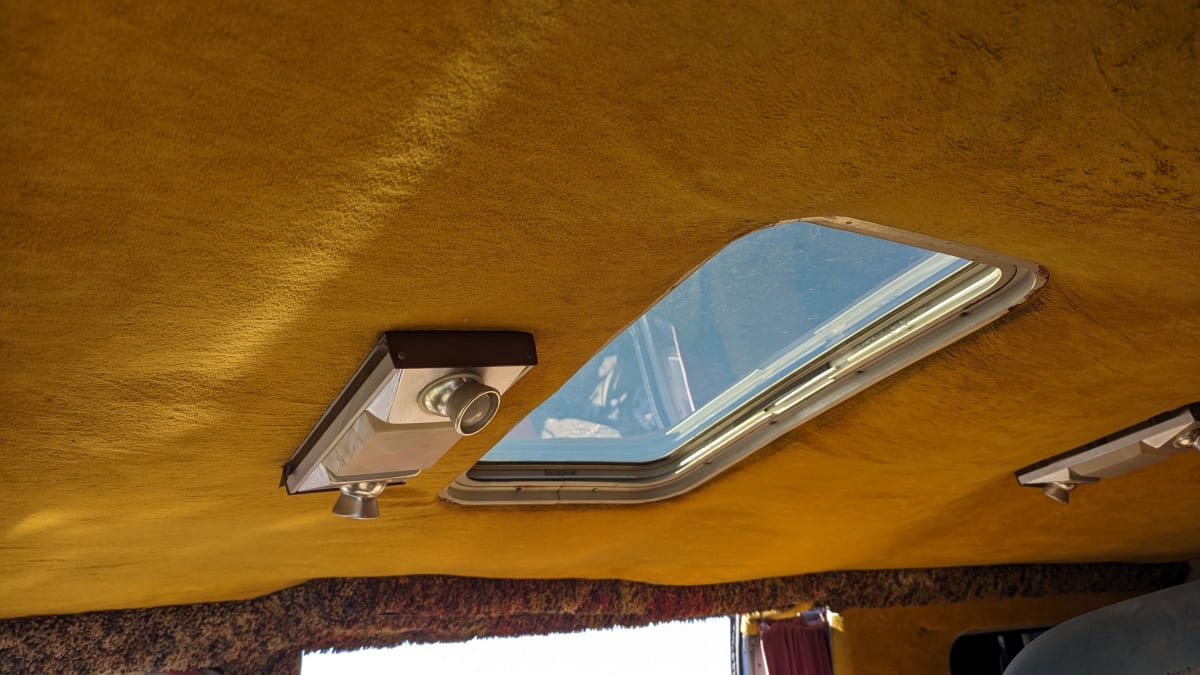
Sunroofs and map lights? Check!
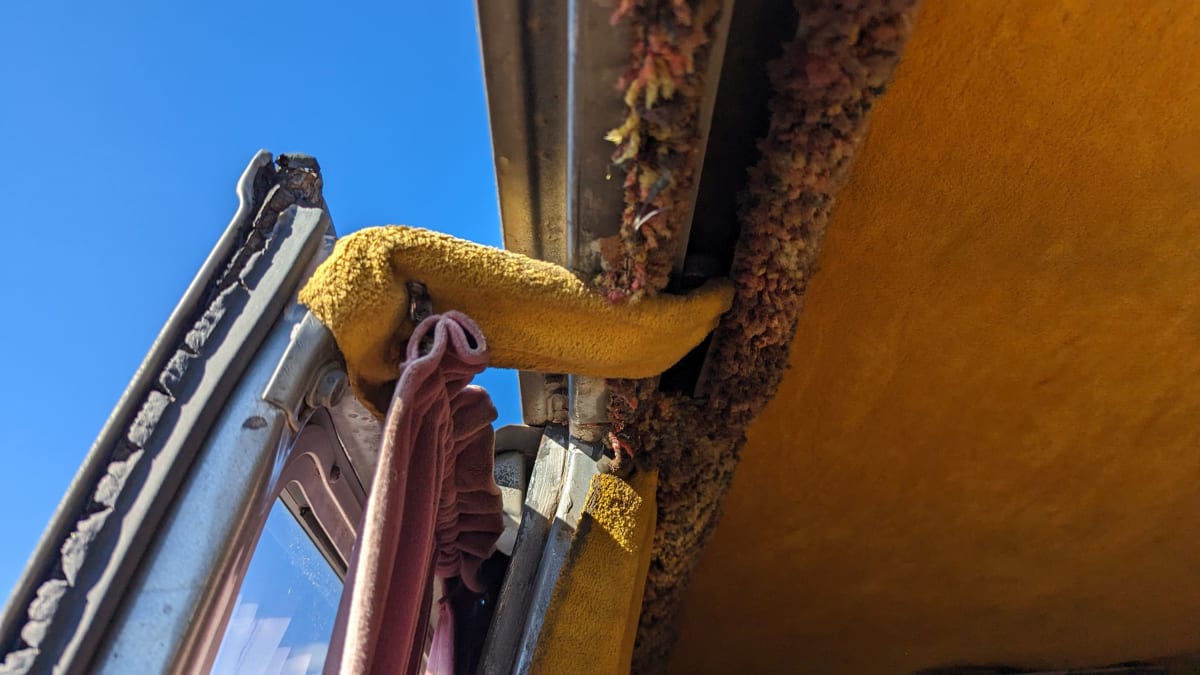
The velour upholstery covering the sliding-door hardware is a nice touch.

It appears that this van was owned by an employee of Sandia National Laboratories, located inside Kirtland Air Force Base in New Mexico. That’s about a seven-hour Chevy Van trip from its current, final parking spot.
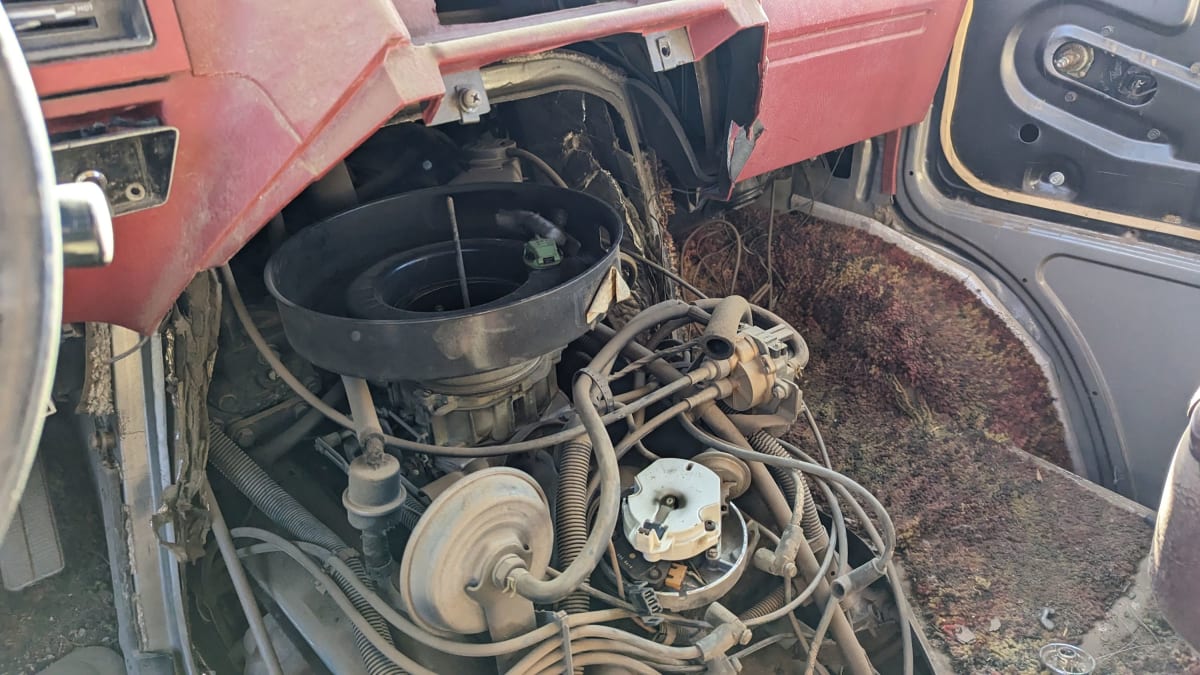
The base powertrain in the G20 Chevy Van for ’78 was a 292-cubic-inch (4.8-liter) straight-six, coupled to a column-shifted three-speed manual transmission. I’ve found a van with that setup during my junkyard travels, but nearly all conversion vans got a V8 with automatic transmission. That’s what we’ve got here. The engine lived under a doghouse that protruded fairly deep into the passenger compartment, making this a semi-mid-engined vehicle.
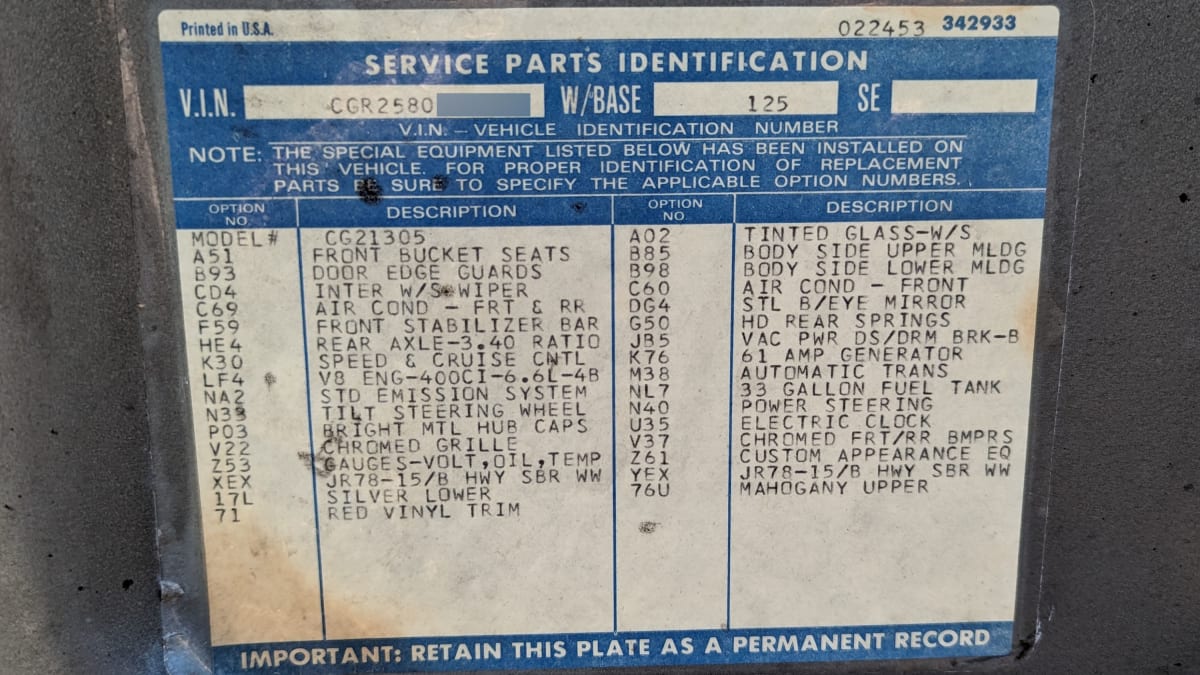
The equipment sticker under the hood tells us that the original engine was a 400-cubic-inch (6.6-liter) small-block, rated at 175 horsepower and 290 pound-feet. It’s possible that that very engine still lives in this van, but swaps are common in trucks like this. It’s simple to build a 400 to make serious power with off-the-shelf-speed parts, as I learned when I built a not-very-wild 400 for a 1965 Impala sedan and knocked off mid-13-second quarter-miles with it at the dragstrip. 400 blocks used to be worth decent money, so perhaps someone will rescue this one before the crusher eats it.
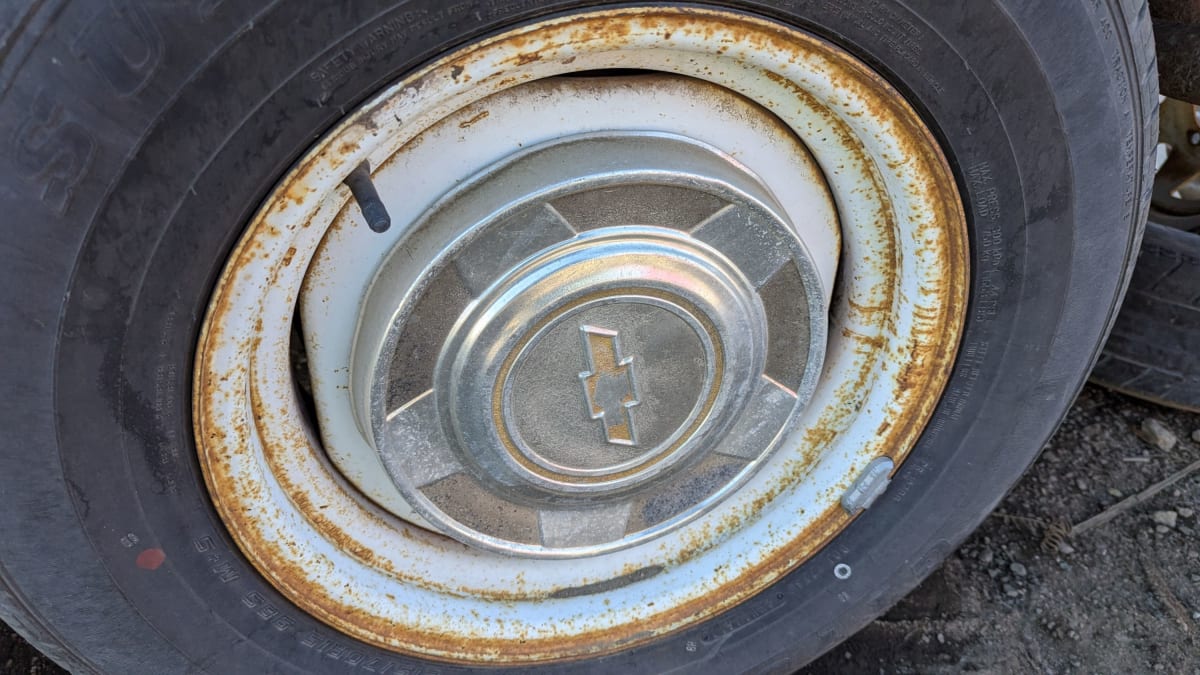
Conversion vans are still being made, and I’ve documented some of the newer ones (including a couple based on the Toyota LiteAce). There’s something special about a Malaise Era time capsule like this one, though.
Chevy Van beats Ford and Dodge on value.