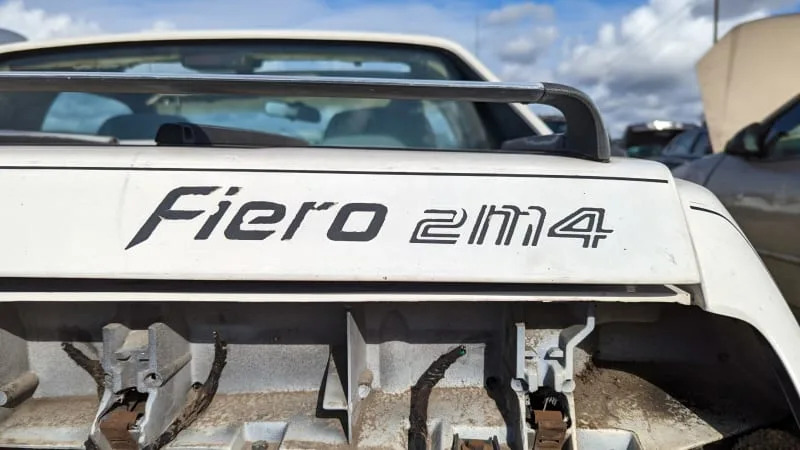
The mid-engined, plastic-bodied Pontiac Fiero two-seater caused great excitement when it hit the streets as a 1984 model, then became something of an embarrassment for GM when its design flaws became clear to the car-buying public. Still, when a V6 engine became available for 1985, followed by a fastback roof for 1986, the air of Pontiac Excitement around the Fiero lingered to a certain extent. We took a look at a discarded ’86 Fiero GT with both the 2.8-liter V6 and the fastback body last year, and now we’ll take a look at an example of the econo-commuter four-cylinder notchback version from the same year.
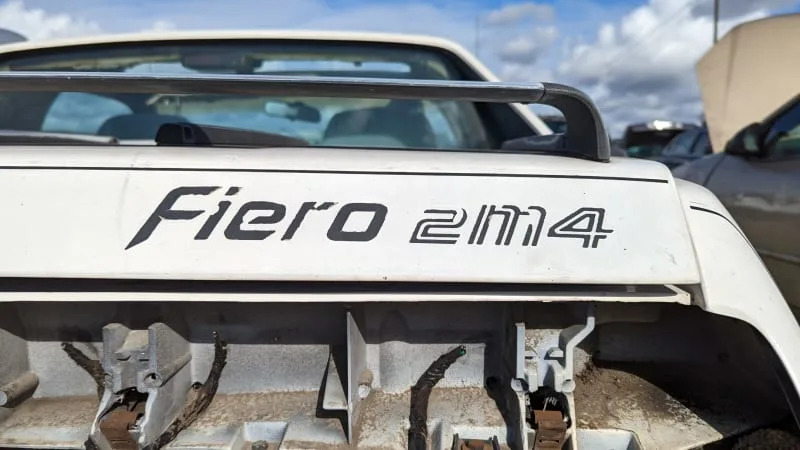
Pontiac used the 2M4 designation (standing for two seats, mid-engine, four cylinders) on four-cylinder Fieros, while the six-cylinder cars were known as 2M6s. 2M4 decals went on four-banger Fieros for the 1984-1986 model years, while 2M6 decals seem to have been applied less consistently to the V6 cars of that period.
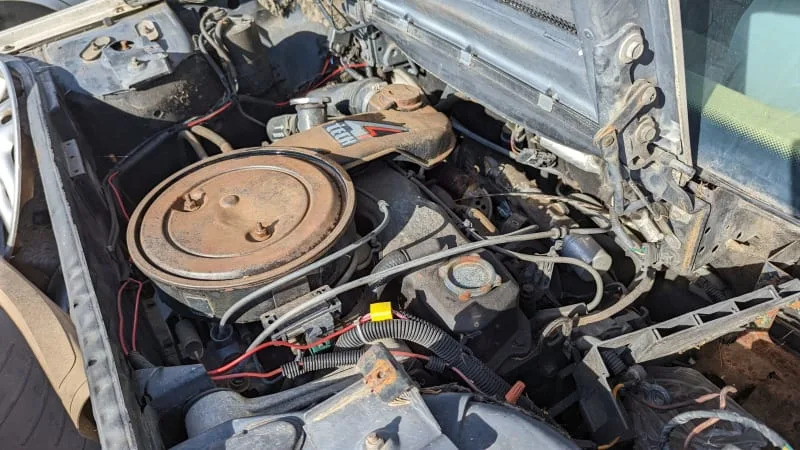
During the early development period of the car that became the Fiero, the idea was that it would be a nimble sports car with a lightweight engine. Then the plan shifted, with the Fiero intended to be a gas-sipping commuter. When the car finally hit showrooms, it was a lot heavier than intended, it had a Chevy Citation front suspension in the back plus a Chevette front suspension, and its engine was the low-revving, weighty Iron Duke 2.5-liter straight-four. The Duke was about the least sports-car-appropriate four-cylinder engine The General could dredge up from his parts bins, but it was cheap and there was no shortage of production capacity.
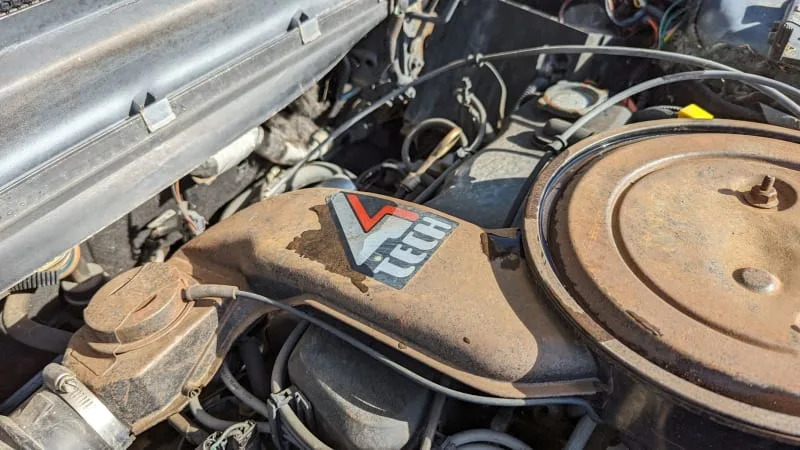
By the time the Fiero came out, the Iron Duke had been renamed the Tech 4. This one was rated at 92 horsepower and 132 pound-feet. The V6 Fieros get all the press today, but plenty of the Duked versions were sold (amazingly, the Chevrolet Camaro was available with Iron Duke power from 1982 through 1986).
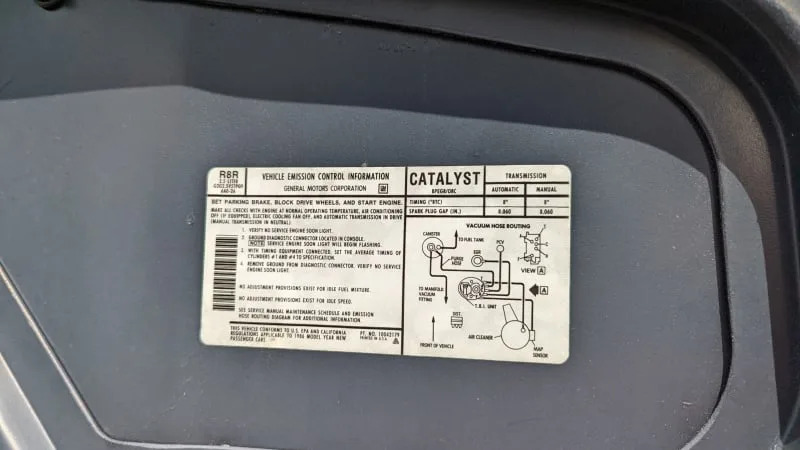
The emissions sticker tells us that this was a California-market car, rather than the “49-state” model the rest of the country got. California-specific emissions hardware added $99 to this car’s price ($277 in 2023 dollars).
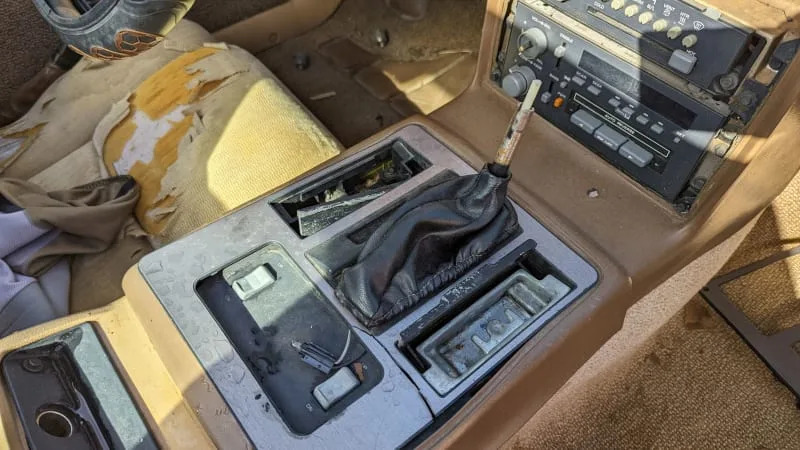
While this car is a base model, the original buyer loaded it with options. The transmission is a three-speed automatic, priced at $465 (about $1,303 in 2023 dollars). A five-speed manual was standard equipment on the 1986 Fiero, though the old-fashioned four-speed manual was still available for a $50 credit ($140 now).
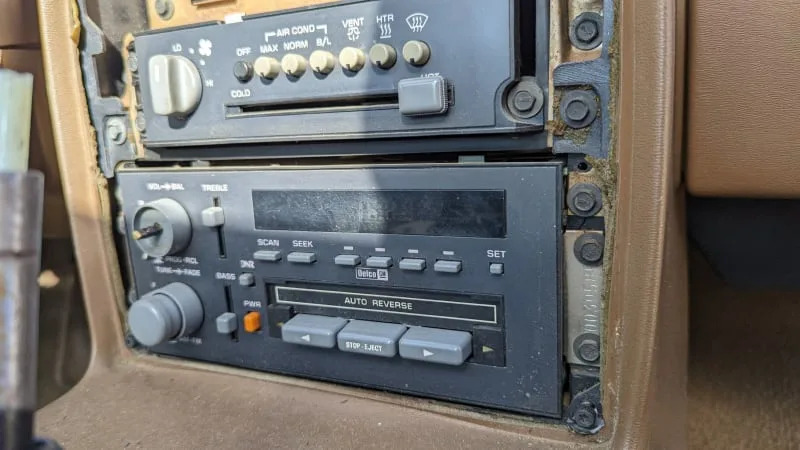
The air conditioning added $750 to the bottom line ($2,101 after inflation), while this Delco AM/FM/cassette deck with auto-reverse cost $429 ($1,202 in today’s money). Even an AM-only radio cost $112 extra ($314 now) in the base ’86 Fiero, which had an MSRP of $8,949 ($25,069 in 2023). Obviously, you needed some kind of tunes in order to experience the memorable music of the middle 1980s.
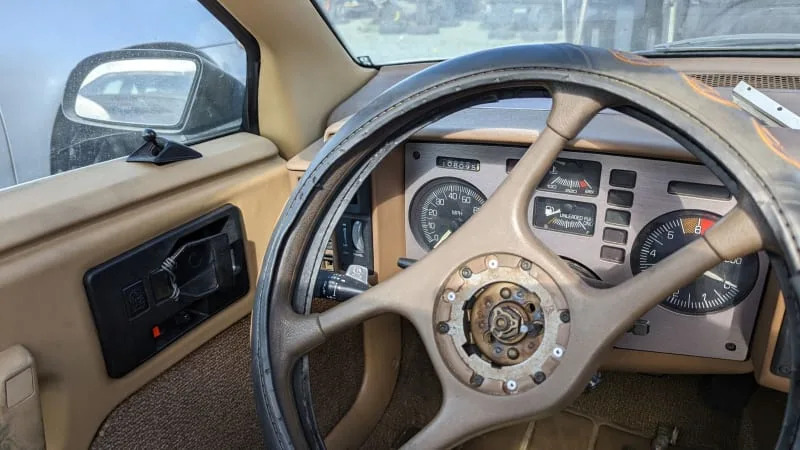
The steering wheel is the four-spoke “rally” model from the pricier Fiero SE, a $65 ($182) option in this car.
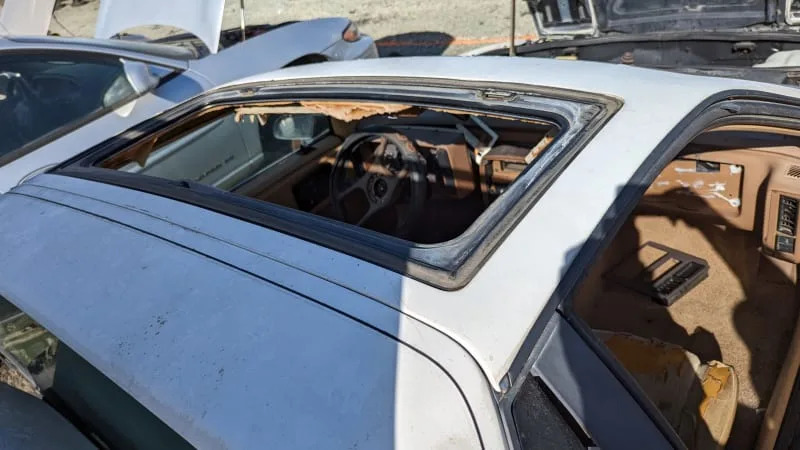
Like this sunroof? It cost $310 ($868).
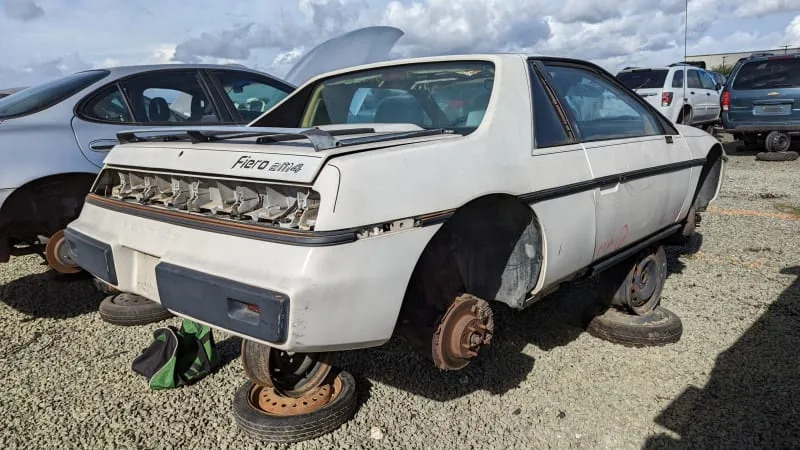
GM finally gave the Fiero a bespoke suspension plus a sleeker body for 1988, but that proved to be the car’s final year. Meanwhile, Toyota and Honda kept selling their little two-seaters, the MR2 and CRX. If you wish to point out parallels between the careers of the Fiero and the Chevrolet Corvair, they are easy to find.
I was a 20-year-old Mercury-driving Californian when this commercial aired, and I don’t recall being impressed by the Fiero’s space-age design at the time.
Picky hitchhikers wanted nothing to do with slushbox-equipped Fiero 2M4s.