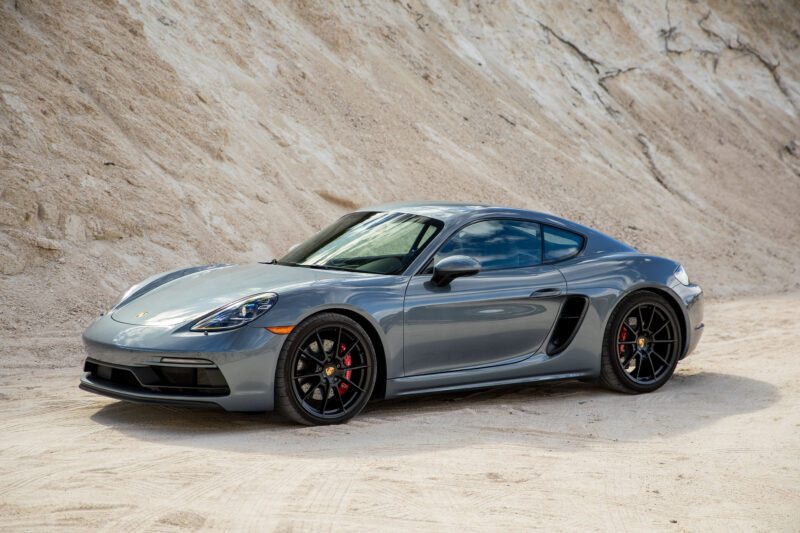
Over the past few years, Porsche has been telegraphing the imminent demise of the internal combustion-powered mid-engine Cayman and Boxster sports cars in favor of an as-yet-unnamed EV replacement. While there’s little doubt that this successor will deliver impressive performance, the switch from gasoline to electrons brings with it a number of foregone conclusions about the car’s design.
Lightness and engagement have been hallmarks of Porsche sports cars since the first 356 rolled out of Gmünd, and the loss of a conventional ICE powertrain in favor of a hefty battery pack and synthesized noise is the kind of paradigm shift that fills traditionalists with a sense of dread. And with the introduction of the top-tier Cayman GT4RS and Spyder RS models over the past few years, there’s been a lingering sense that the internal combustion 718 had reached its final form and would soon shuffle off this mortal coil. But Porsche recently had a change of heart about its aggressive EV push, and as a result, the 718 will stick around with some form of internal combustion for the foreseeable future.
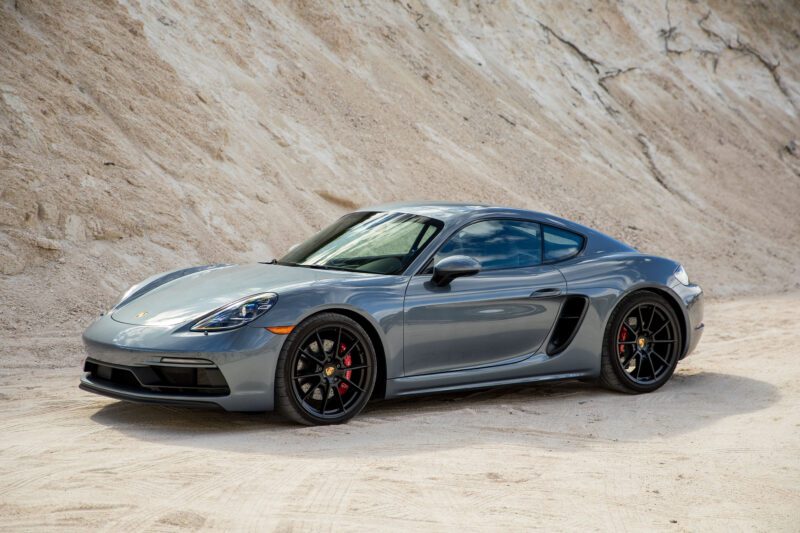
This stay of execution might seem like a step backwards at first glance, but after spending a few days with the 718 Cayman GTS 4.0 on the streets of Los Angeles and the canyon roads that drape the Angeles National Forest, I’d be perfectly fine with being labeled a Luddite. It is as close to flawless as any sports car I’ve ever driven, and although the 718 is starting to show its age nearly a decade on, it’s hard to see reinvention as the most logical way forward.
The GTS 4.0 itself reflects Porsche’s willingness to tweak its product development strategies based on the demands of its customers. Despite quantifiable improvements in both output and efficiency, Porsche-philes balked when the 718 debuted back in 2017 with turbocharged flat-four power plants instead of the naturally aspirated flat-six engines that had powered its predecessors. The introduction of the Cayman GT4 brought a flat-six back into the fold in 2019, but the model’s limited availability and track-focused tuning aimed it squarely at a niche audience.
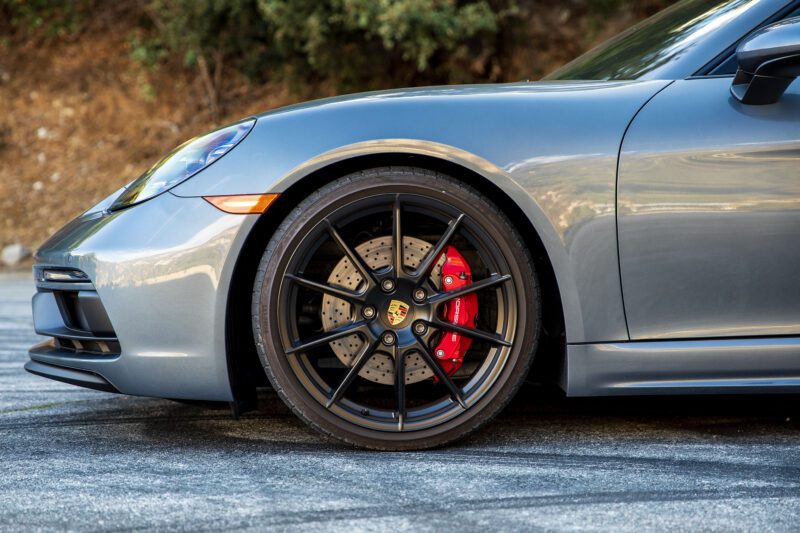
To rectify the situation, Porsche introduced the Cayman GTS 4.0 for 2021. Motivated by a slightly detuned version of the 718 GT4’s four-liter naturally aspirated flat-six, the GTS 4.0 dishes out 394 horsepower and 309 pound-feet of torque when outfitted with the six-speed manual gearbox. PDK-equipped models get 8 additional lb-ft. This represented a deficit of just 20 hp versus the GT4 while matching it for torque output, and the GTS 4.0 tips the scales with a nearly identical curb weight of around 3,200 lbs. The crucial difference between the two iterations is that Porsche’s GTS models have always been serious performers that are tuned for the road rather than the track, and that ethos holds true with the 718 Cayman GTS 4.0.
In a place like Los Angeles, this is a sports car that you could realistically drive every day. The suspension is firm but not abusive, the clutch is perfectly weighted, and while the active exhaust system will let that flat-six sing proudly to its 7,800 RPM redline, it’s also willing to settle into the background during extended highway stints.
And as the 911 continues to adopt an increasingly tech-forward persona, the 718 has become a refreshing throwback of sorts. Unlike the latest 911, the 718 still has a big analog tachometer in the center of the gauge cluster, and while all 992.2 911 Carrera models have ditched the distinctive twist-to-start faux-key arrangement in favor of a conventional start/stop button, the 718 retains this tactile callback to Porsche’s heritage.
While we’re on the subject of tactility, additional points must be awarded to 718’s cabin. Physical switchgear may not have the visual pizzazz of capacitive buttons and touchscreen controls, but in practice, they tend to be much easier to operate, and virtually every commonly-used feature in the 718 has a knob, a rocker switch, or an honest-to-goodness depressible button assigned to it. And that means you don’t have to take your eyes off the road ahead to dig into an infotainment system sub-menu or confirm that something was properly registered – if you want to lower the temperature of the air conditioning, stiffen the dampers, or quiet down the volume of the exhaust, it’s all just a simple button press away.
The GTS 4.0 also has a steering wheel-mounted rotary knob that allows you to cycle through the various drive modes, but it’s largely superfluous because most of the settings that these modes alter have dedicated buttons on the center console anyway. The fact that automatic rev-matching can’t be enabled or disabled independently of the powertrain mode is one of the few shortcomings of this control scheme, while the lack of wireless Apple CarPlay and Android Auto functionality makes the relatively bare-bones infotainment system feel a bit dated by contemporary standards.
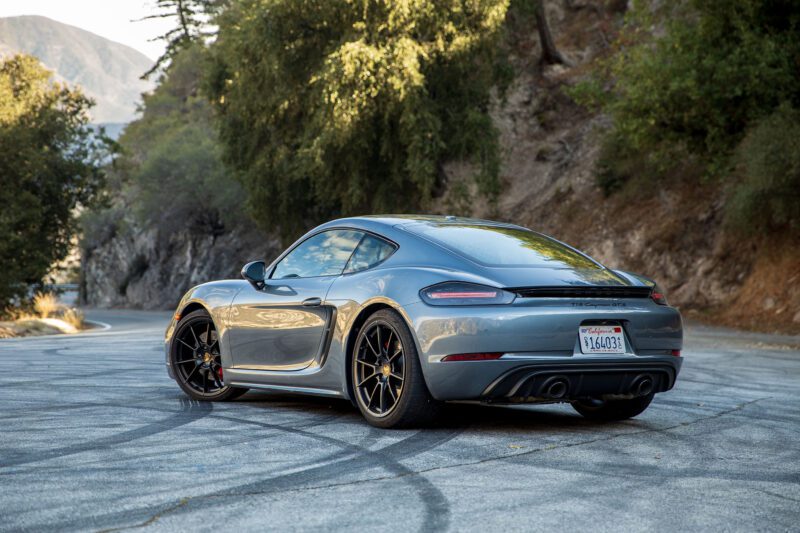
These trivial compromises instantly become irrelevant when you point the nose of the 718 Cayman GTS 4.0 down a twisting stretch of tarmac, though. Without the seriousness that’s inherent to models from Porsche’s GT division, the GTS 4.0 feels playful near its dynamic limits rather than intimidating. Although more aggressive gearing and stickier tires might get you through a technical section of road a bit quicker, there’s something to be said for the impeccable balance of GTS 4.0’s tuning. Simultaneously communicative and seemingly unbothered by being wrung by the neck, the car’s lightweight construction, linear power delivery, and road-oriented spring rates make the outer reaches of its formidable capability feel eminently accessible, even on less-than-ideal road surfaces.
Truth be told, I feel like I could drive this thing for the rest of my life and want for nothing. This is the kind of car that you will find yourself making excuses to drive. While the steady march of progress will likely continue to give us increasingly quicker and more capable machines as time goes on, in the case of the 718 Cayman GTS 4.0, I’m not really sure that we need more of anything. We might not be able to stop time, but we can savor a moment when the opportunity strikes, and this one’s well worth appreciating while it lasts.
Images: Bradley Iger