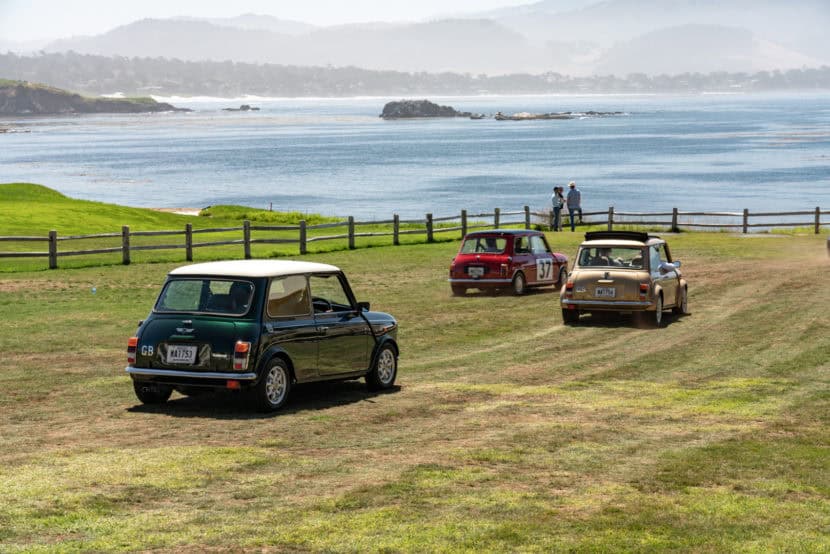
Car anniversaries can feel forced, but this one has had one of the largest impacts on BMW’s 100 years history. On April 26, 2001, the first new MINI came off the line at Plant Oxford, kicking off series production for what became the first-generation modern MINI. That date matters because it’s when MINI stopped being what many considered a retro-cool icon, but rather a mass-produced car for the globe. It also anchored in BMW Group’s UK manufacturing footprint in a way that still defines the brand today.
The Takeover From Rover
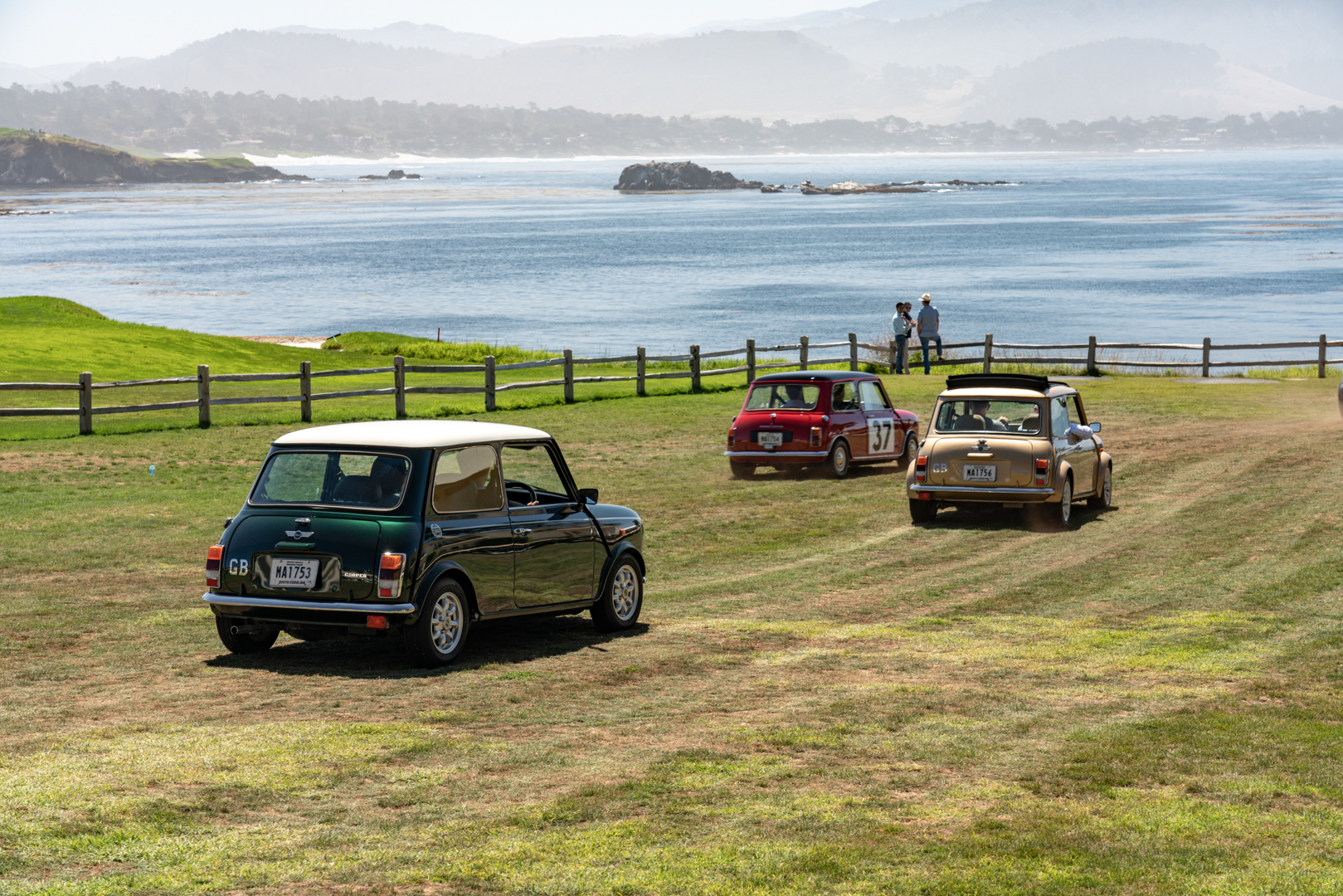
BMW’s late-1990s move on MINI looked like a long shot. Back then, small cars were appliances—Toyota Tercel, Geo Metro, Chevy Prizm, and a long list of anonymous A-to-B transportation. MINI, still under Rover, limped along with aging plants, inconsistent build quality, and a brand image that hadn’t kept pace with the market.
BMW didn’t buy it for nostalgia. It bought it to build something the segment didn’t really have yet: a genuinely premium subcompact. What followed wasn’t a refresh. BMW tore the idea down to the studs and rebuilt it, and the modern MINI changed what people expected from a small car.
Rover and its owners sat on a tangled portfolio—Rover, Mini, and Land Rover—and by the time BMW arrived, all three carried baggage. Old factories and dated processes dragged everything down. Labor unrest didn’t help. The end product, more often than not, simply couldn’t keep up with the competition.
BMW didn’t try to save every piece of the puzzle. It took what it needed from Land Rover’s SUV experience and applied it to its own future—work that fed directly into the X5.

MINI followed a different path. BMW treated it as its own project, the same way it later approached Rolls-Royce: separate brands with clear roles, sitting above and below BMW in price and character.
The job was massive. Starting from scratch might have been easier. BMW began by sharpening the identity, right down to the all-caps MINI badge that stuck. Then it tackled the hardware. New equipment replaced tired machinery inside the Cowley/Oxford facility. But none of that mattered without a product people actually wanted.
That’s where the new Cooper landed. Frank Stephenson’s design won the internal fight—beating a proposal from Adrian van Hooydonk—and the car debuted in 2001.

In the U.S., many initially saw it as too pricey for the market. BMW of North America pushed it through the company’s existing dealer infrastructure and made a practical call: don’t lead with stripped cars. Offer the stronger, better-equipped versions first, get buyers to understand the point, and let the brand earn its place.
The Paris Reveal

The public introduction happened before Oxford started building cars. In a September 12, 2000 press release, BMW Group said the MINI Cooper would make its world debut on September 28, 2000 at the Mondial de l’Automobile in Paris. BMW described it as the first total design evolution since the original Mini launched in 1959, while keeping core cues like the “wheels at the corners” layout.
BMW also previewed the mechanical brief in plain terms: a compact hatch with a 16-valve 1.6-liter four-cylinder, driving the front wheels, tuned around quick responses. The same release said the car was scheduled to launch in Europe and Asia in 2001 and go on sale in the U.S. in the first quarter of 2002.
Oxford and Swindon: The Reboot’s Production Backbone

By BMW’s own timeline, MINI body parts production started in Swindon at the beginning of 2001, and then the big moment followed: April 26, 2001, Oxford builds its first car of the new era.
BMW has also put a detail on that first Oxford-built car that enthusiasts love: a MINI Cooper in Chili Red, with a white roof and white mirror caps.
The First Modern MINI Landed So Hard

BMW’s retrospective language is blunt: it calls the relaunch the “original” of a premium small-car segment in the 21st century. You don’t have to buy the branding to see what they mean—back then, small cars were still expected to be cheap, basic, and disposable. MINI arrived as a small hatch built like a grown-up product, with a deliberate design identity and real configurability.
Oxford’s output scaled quickly. The UK plant has built millions of MINIs, with milestones including over 3 million by late 2016 and nearly 4.5 million by early 2024 (including classics and new MINIs since 2001), contributing to the total of over 11.65 million cars produced at the plant since 1913.
What’s Next?

In 2026, “25 years of modern MINI” isn’t about looking backward. It’s about the day MINI became a real global product again. MINI also ended up mattering to BMW Group in a way few people predicted. It brought different buyers into the fold, gave the company a second performance lane that wasn’t about horsepower, and helped lock in the multi-brand blueprint that still defines the group today.
You can draw a straight line from MINI’s success to BMW’s confidence in running distinct brands without blending them.
And the next chapter is already the hard one. Electrification suits MINI on paper—instant torque, low-speed punch, city packaging—but it can also smooth out the edges that made the early cars feel alive. MINI’s job now is to keep the steering, chassis, and attitude doing the talking, even as batteries and software take over the headline specs.

At the same time, a sizable chunk of the enthusiast base still wants a combustion MINI to stick around—not out of nostalgia, but because a light, turbo four with real mechanical character (and, when possible, a proper manual) still fits the brand like a glove. For those people, the “future MINI” isn’t an either/or argument. It’s a hope that the lineup keeps room for an ICE or hybrid option with the same pointy front end and playful balance, even as the EVs take over the volume.
If MINI can keep both sides honest—EVs that still feel like MINIs, and a combustion path that doesn’t turn into an afterthought—the 25-year story won’t end at 2001. It’ll keep rolling, just with a split soundtrack.
Here’s the BMW-era MINI lineup (2001–present) broken down by generation (“Mk”) and chassis code—the way enthusiasts usually track them.
- Mk I (First BMW-era MINI, 2001–2008)
- R50 – MINI One & Cooper (2001–2006)
- R53 – MINI Cooper S (2001–2006)
- R52 – MINI Convertible (2004–2008)
- Mk II (Second generation, 2006–2016)
- R56 – Hatch/Hardtop range (2006–2013)
- R55 – Clubman (2007–2014)
- R57 – Convertible (2009–2015)
- R60 – Countryman (2010–2016)
- R58 – Coupé (2012–2015)
- R59 – Roadster (2012–2015)
- R61 – Paceman (2013–2016)
- Mk III (Third generation, 2014–2024)
- F56 – Hatch/Hardtop (2014–2024)
- F55 – 5-door Hatch (2015–2024)
- F57 – Convertible (2015–2024)
- F54 – Clubman (2015–2024)
- F60 – Countryman (2017–2023)
- Mk IV (Current generation, 2023/2024–present)
- J01 – Cooper E/SE (battery-electric) (2023–)
- U25 – Countryman (2023–)
- F66 – Hatch/Hardtop (2024–)
- F65 – 5-door Hatch (2024–)
- F67 – Convertible (2024–)
- J05 – Aceman (battery-electric) (2024–)