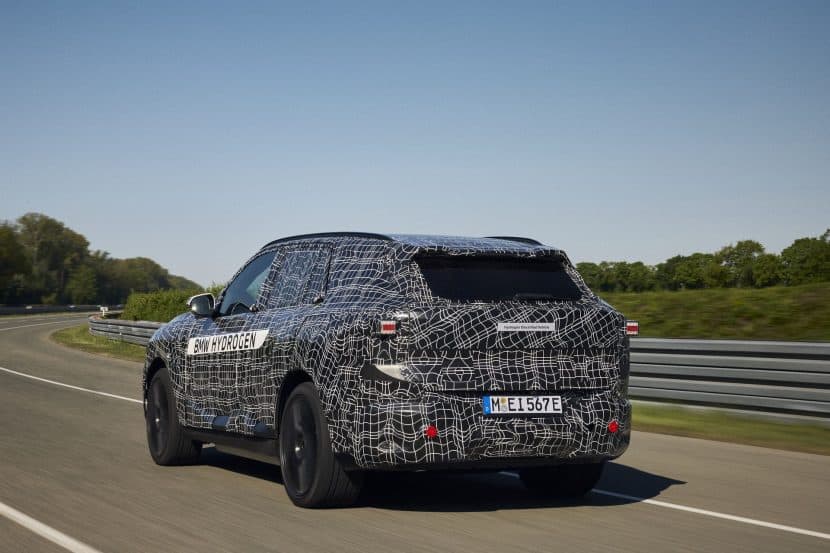
Most automakers see investing in hydrogen as a waste of time and precious resources, but not BMW or Toyota. The two automotive juggernauts believe fuel cell vehicles are viable for production and continue to pursue this niche, while most rivals have given up. Toyota has admitted the Mirai hasn’t been a success, yet it still maintains that hydrogen has a future.
BMW has been researching hydrogen vehicles since the 1970s, but it has never brought one to market. That will finally change in 2028, when the iX5 Hydrogen goes on sale. While many argue that fuel cell vehicles are a futile effort, the German luxury brand takes a different view. BMW’s Chief Technology Officer told Auto Motor und Sport that hydrogen will play a “crucial role” in the car industry.
Joachim Post expects hydrogen infrastructure to expand in the coming years. BMW hasn’t decided whether it will launch additional fuel cell models beyond the iX5 60H xDrive, but it believes momentum is building: “There’s a lot happening in Japan, Korea, and California right now.”

Although the hydrogen-powered iX5 is unlikely to be a strong seller initially, BMW’s CTO highlights one key advantage of fuel cell vehicles. An FCEV would make BMW less reliant on certain raw materials than conventional EVs, which require large battery packs. Naturally, hydrogen cars are also seen in Munich as another tool for achieving decarbonization. “We are convinced that our strategy of technological openness is absolutely right.”
The iX5 Hydrogen will be built on the same Spartanburg assembly line as the combustion-engine X5. The battery-electric iX5 will also be produced at the South Carolina plant, with all versions of the luxury SUV sharing the CLAR platform. That lineup includes plug-in hybrids and the hotter V8-powered M variants.
You won’t have to wait until 2028 to buy the fifth-generation X5. The “G65” is actually set to arrive later this year with gasoline, diesel, plug-in hybrid, and fully electric drivetrains. Roughly two years after that, the fuel cell version will become BMW’s first commercially available hydrogen car. All previous efforts were limited to demonstration and trial vehicles, none of which were sold to customers.
BMW and Toyota aren’t the only automakers that still believe in hydrogen. While Stellantis and General Motors have recently pulled the plug, brands like Honda and Hyundai continue to see fuel cell vehicles as part of the solution for reducing fleet emissions.
Source: Auto Motor and Sport