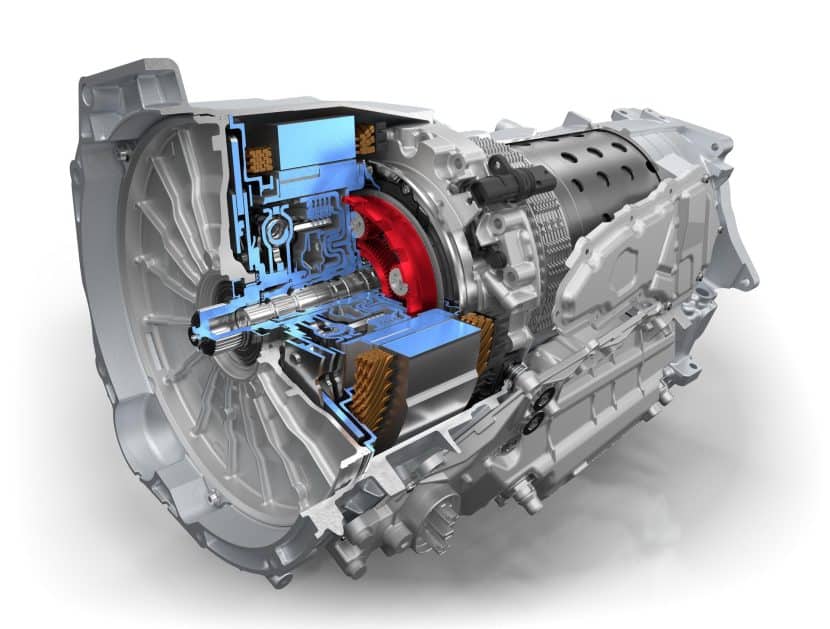
BMW and ZF Friedrichshafen signed a multi-billion-euro supply agreement extending through the late 2030s for ZF’s 8-speed automatic transmission (8HP). The deal commits both companies to continuously develop the transmission with emphasis on electrified powertrain compatibility. The agreement essentially locks in BMW’s transmission sourcing for the next decade while giving ZF certainty to invest in platform evolution.
The 8HP Stays Relevant
The 8HP transmission has been a workhorse for BMW since its introduction. It’s efficient, it’s proven, and it’s already in millions of vehicles worldwide. Rather than replace it, BMW and ZF are betting that the transmission can evolve to remain competitive through the industry’s ongoing shift toward electrification.
That might sound counterintuitive—why develop a traditional transmission when everyone’s talking about electric motors and direct drive? Because BMW is using the term “technology openness.” Even as BMW shifts toward pure electric vehicles, the company will continue producing combustion-powered cars, plug-in hybrids (PHEVs) and mild hybrids for years. Those vehicles need transmissions that can handle the complexities of managing multiple power sources efficiently.
The 8HP’s next generation will be engineered specifically around that challenge: delivering the efficiency gains and performance needed in electrified configurations while maintaining the reliability and refinement BMW customers expect.
“Together with BMW, we are sending a strong signal for innovation, efficiency, and sustainability in an industry undergoing dynamic change,” said Mathias Miedreich, CEO of ZF. “This agreement highlights the strategic importance of our 8-speed automatic transmission as a key technology for the transformation of drive systems.”
The Engineering Challenge Ahead

Sebastian Schmitt, who heads ZF’s Electrified Drive Technologies division, laid out what the 8HP’s evolution actually means: three core priorities for the next-generation transmission.
First, efficiency. The 8HP needs to deliver better fuel economy and lower emissions in whatever powertrain configuration it’s paired with. That’s always true for transmissions, but electrified drivetrains make it more critical—wasted energy in a PHEV wastes both fuel and battery capacity.
Second, performance. The next-generation 8HP needs to perform across different electrified architectures. A parallel hybrid powertrain works differently than a series hybrid, which works differently than a PHEV. The transmission has to be flexible enough to deliver performance gains across all those configurations.
Third, long-term viability. Regulations will change. Market preferences will shift. The 8HP needs to be engineered today in a way that keeps it relevant through those changes, without requiring a complete redesign.
In practical terms, this deal matters because it means BMW customers will continue getting well-engineered transmissions from a company with deep expertise and proven reliability. The 8HP is already a known quantity—it works well, it’s durable, and it integrates seamlessly into BMW’s various powertrains.
[Source: ZF]