Article Summary
- The i7 facelift will debut at the 2026 Beijing Auto Show with a brand-new Rimac-developed Gen6 cylindrical cell battery pack, offering 20% higher energy density and significantly faster charging than the outgoing model.
- The 2027 BMW i5 LCI cannot adopt the same cylindrical cell architecture due to its existing G60 platform, but the broader BMW–Rimac partnership — explicitly designed to cover multiple EVs — could still deliver a meaningful battery upgrade and an estimated 750–770 km of WLTP range.
- Despite early spy shots hinting at a Neue Klasse exterior overhaul, the i5 facelift has been dialled back to a more restrained update, though the interior will be dramatically reworked with iDrive X and Panoramic Vision technology.
BMW has officially confirmed that the upcoming i7 facelift will benefit from a brand-new battery pack developed in partnership with Rimac. It’s a significant milestone for the two-year-old BMW–Rimac alliance — and it immediately raises a question we first put to our readers back in December 2025: which other BMWs are in line for the same treatment? The i5 facelift, due in 2027, seems like the most logical next candidate.
The BMW–Rimac Partnership, Briefly Explained

Although the collaboration between BMW Group and Rimac was made public in April 2024, Mate Rimac revealed at the time that the two companies had actually been working together in secret since 2022. The Rimac Group’s CEO and founder described the deal as “not only the biggest job in our history, but perhaps the biggest contract in the history of the country.” It was, from the start, a long-term arrangement — explicitly covering additional electric vehicles beyond whichever model would be first.
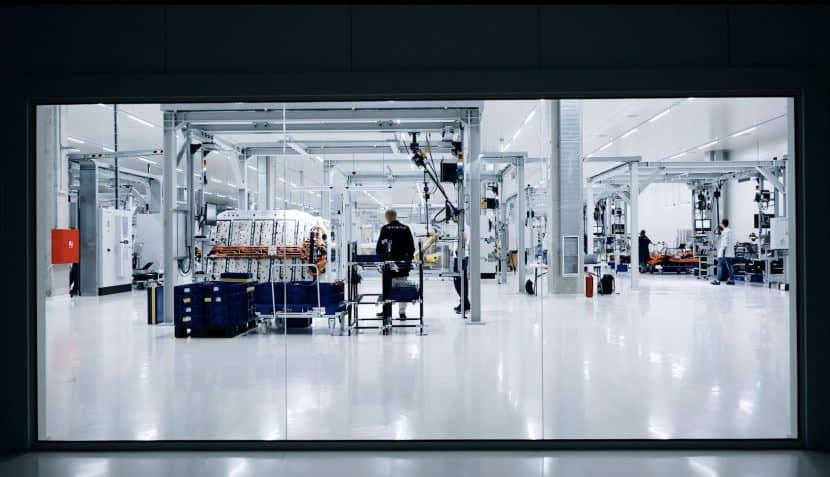
That first model turns out to be the i7 facelift, set to debut at the 2026 Beijing Auto Show on April 22. Despite being a mid-cycle update, the i7 is getting a completely new battery architecture. BMW is switching to its Gen6 pack, which uses 4695 lithium-ion cylindrical cells — the same format already seen in the new iX3 and i3. Compared to the outgoing prismatic cells, cylindrical cells offer roughly 20% higher energy density. Rimac has helped BMW integrate these with Gen5 module-based technology, creating a scalable architecture that can, in theory, be applied across multiple platforms. The battery itself will be manufactured at the Rimac Campus near Zagreb, Croatia, and shipped to BMW’s Dingolfing plant for final assembly.

The existing i7 tops out at 195 kW of charging power — good for 106 miles (170 km) of range in 10 minutes and a 10%–80% charge in 34 minutes. BMW has indicated the facelifted model will “charge much faster,” though exact figures haven’t been released. Reaching the 400 kW peak of the Neue Klasse models seems unlikely without an 800-volt electrical architecture, but meaningful progress over the current spec appears certain.
So, What About the i5?

Here’s where it gets interesting. The i7 is just the opening chapter of what BMW and Rimac have been building toward. The long-term nature of the deal — explicitly covering future electric vehicles — means additional models will follow. The 2027 BMW i5 facelift, known internally as the G60 LCI, is a natural fit. Based on what we know, we’d expect the i5 LCI to target somewhere in the region of 750 to 770 km of WLTP range, depending on battery size. That would be a substantial leap over the current i5 M60 xDrive’s 516 km — and would put it firmly in the conversation with the best executive EVs on sale.
For now, what the i7 announcement clarifies is that the BMW–Rimac partnership fills a gap in the current lineup for all the upcoming electric facelifts. But it remains to be seen how this partnership will evolve in the future considering that BMW will transition at some point all their cars on the Gen6 architecture.