Article Summary
- BMW’s Chairman of Supervisory Board believes car manufacturers could penalize PHEV owners who never charge their vehicles.
- Companies could reduce engine power in an attempt to persuade drivers to charge the battery.
- BMW claims it’s technically feasible to apply such a disciplinary measure by artificially throttling output.
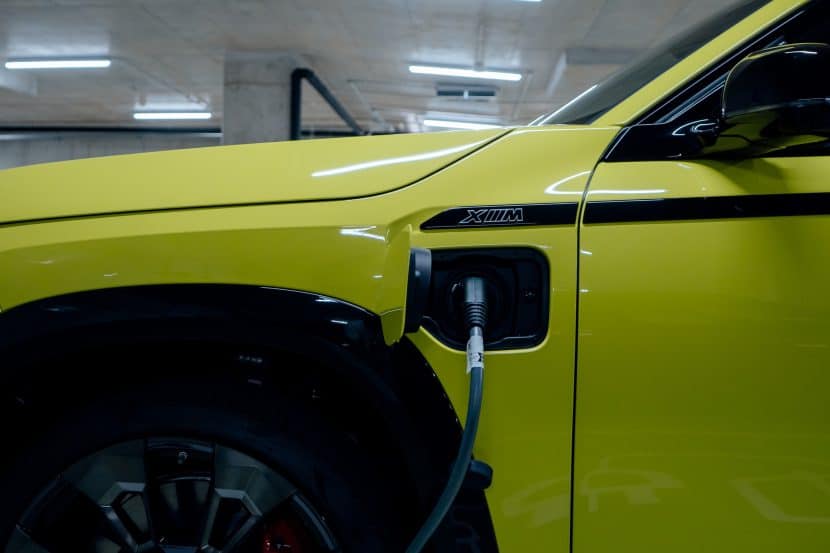
People have mixed feelings about plug-in hybrids. Some see them as the best compromise between combustion-engine cars and full EVs. Charging infrastructure remains underdeveloped in many parts of the world, making purely electric cars unfeasible for many people. Buying a PHEV solves that problem by allowing owners to drive in electric mode for shorter distances while relying on the gas engine for longer trips.
However, studies have shown that people don’t always take full advantage of a PHEV’s battery pack. Some charge their cars only occasionally, while others never plug them in at all, choosing instead to rely entirely on the combustion engine. From an environmental perspective, that’s actually worse than driving a conventionally powered car. You’re burning fossil fuel while lugging around a depleted battery pack. Since the vehicle is heavier than a similarly sized ICE model, fuel consumption is inevitably higher.
This type of behavior has prompted many to argue that plug-in hybrids are little more than an eco-sham. Why? Buyers take advantage of government incentives and tax credits when purchasing PHEVs, but never bother to charge the battery. BMW calls it a “behavioral problem” and is wondering whether there is a way to change that behavior.
In an interview with German newspaper Die Zeit, the automaker’s Chairman of the Supervisory Board proposed an interesting idea. Nicolas Peter said it’s technically possible to monitor how PHEV owners use their cars and how frequently they charge the battery. If they never plug in, a technical measure could persuade them to use the charging port: reduced engine power.
“This is a behavioral problem that discredits a climate-friendly technology that could actually be a good way to introduce people to e-mobility – especially where the infrastructure is still too sparse. One measure would be for car manufacturers to be able to document and even penalize usage patterns. If a driver never charges their battery, the engine power could be reduced; technically, this is feasible.”

Could Reducing Power Convince People To Charge More Often?
BMW’s former finance chief explained that artificially limiting power might encourage PHEV owners to charge the battery. Doing so would allow cars to operate in electric mode more often, putting less strain on an already fragile environment.
The idea of penalizing usage patterns is bound to spark controversy. Some would argue that, at the end of the day, it’s the owner’s decision how to use the car.
Since there’s no precedent for such a move, one can assume any output reduction would be implemented remotely through an over-the-air software update. You’re probably not going to get a call from the automaker asking you to visit the local dealer just to have the power deliberately dialed down.
Ideally, PHEV owners should keep the battery charged, but ultimately it’s the driver’s decision. We honestly don’t see this power cut measure happening anytime soon, if ever.
As a final note, we should point out that plug-in hybrids accounted for 8.1% of BMW’s total sales last year, although that figure slipped to 8% in the first quarter of 2026.
Source: Die Zeit (subscription required)