Article Summary
- The BMW 2 Series Active Tourer is a compact MPV sold in Europe since 2014 that has never been offered in the United States.
- The current U06 generation launched in 2021 and has received no facelift, unusual for a brand that typically refreshes cars every 3-4 years.
- Insider reports indicate production ends by 2028-2029 with no third generation planned, making the X1 the de facto replacement.
Go ahead, ask your BMW-driving friends if they know BMW makes a minivan. Most will say no. A few might vaguely recall something. Almost none will be able to name it. It’s called the 2 Series Active Tourer. It’s been in production since 2014. BMW has committed to two full generations of it without ever bringing it to the United States. If you’ve spent your automotive life in North America, there’s basically no reason you’d know it exists.
That’s the thing about the Active Tourer. It sits in a very specific slice of the European market — the premium compact MPV — that simply doesn’t translate across the Atlantic. Americans who want space buy SUVs. Europeans, particularly German families, have historically been more pragmatic about it. A tall, practical, front-wheel-drive box with a BMW badge makes sense in Hamburg or Munich, where parking is tight and school runs are real. It’s also fairly affordable starting below 50,000 euros.
Why BMW Built It In The First Place
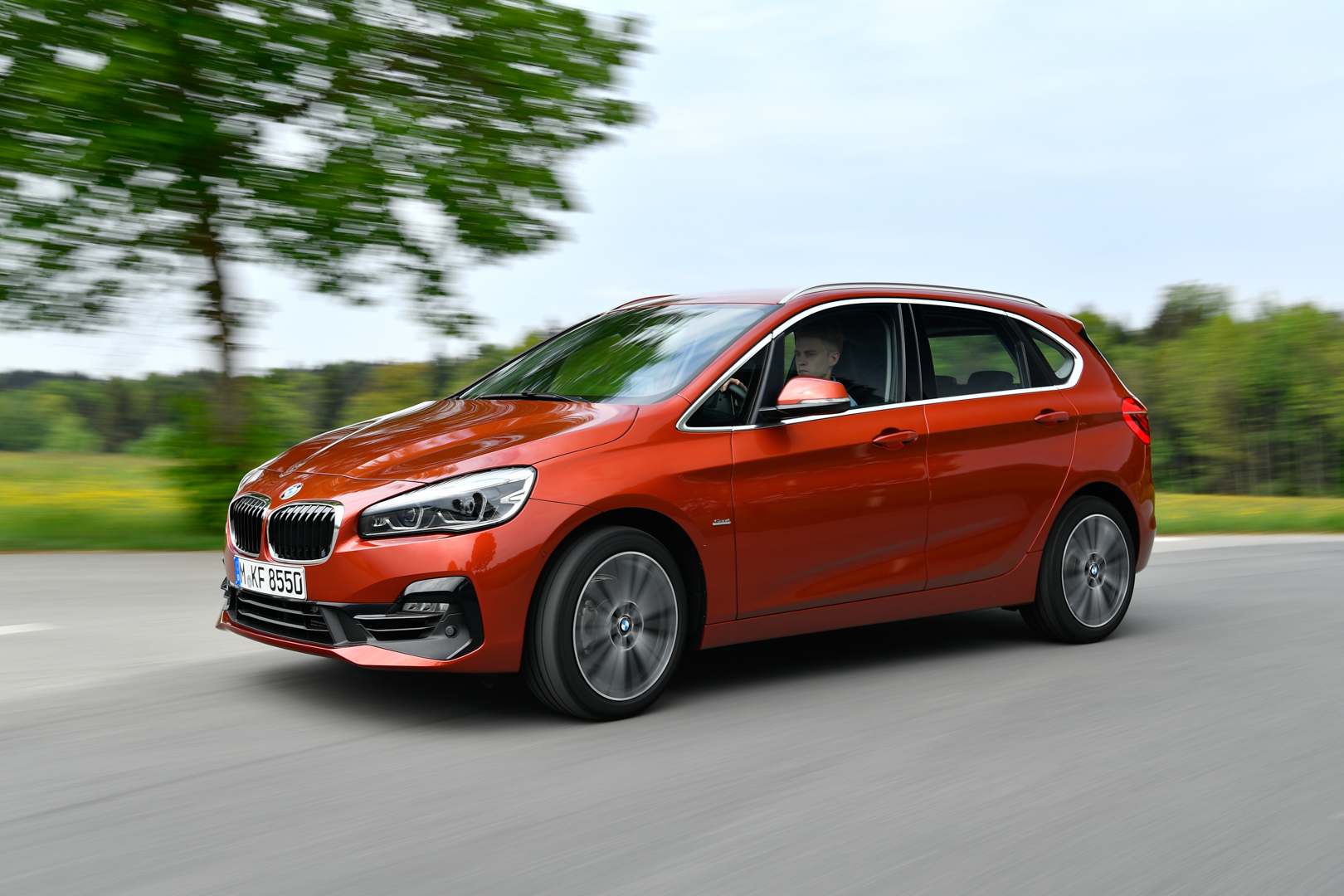
The short answer: money, and Mercedes-Benz. The B-Class had been doing good business in Europe since 2005, giving Stuttgart a premium MPV option for families who needed room but didn’t want an SUV. BMW didn’t have an equivalent. The F45 2 Series Active Tourer fixed that when it went on sale in November 2014.
The car was controversial internally before it even launched. It was BMW’s first front-wheel-drive model, built on the UKL2 platform shared with the MINI Countryman. For a company that had sold itself on rear-wheel-drive dynamics since the E21, building something that drives its front wheels felt like a compromise. It was also the first inline-three engine BMW put in a road car. Enthusiasts were not thrilled.
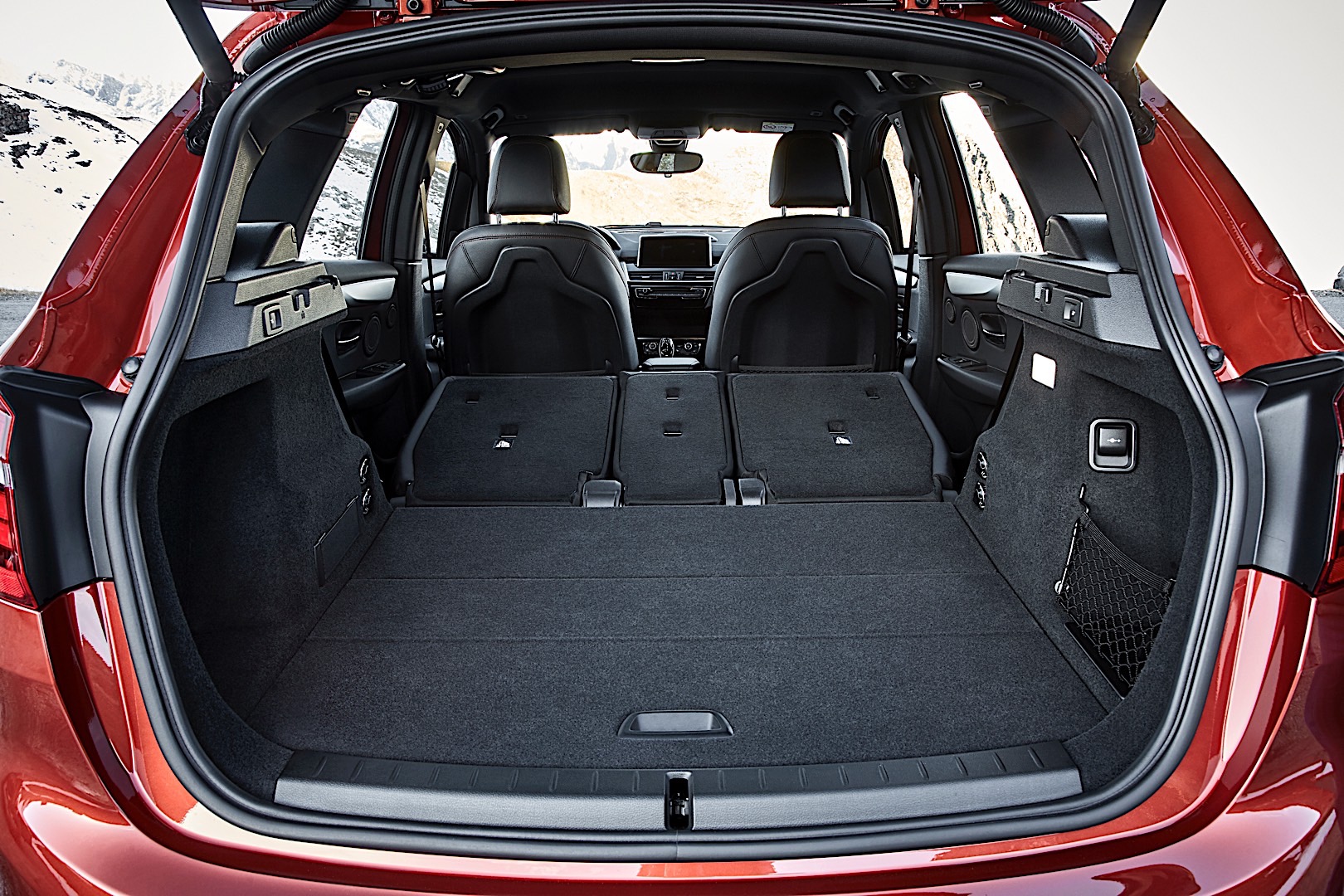
BMW’s counterargument was simple: the people buying an Active Tourer aren’t buying it for track days. They need to fit a double stroller in the back. The car sold well enough to prove the point. Combined with the three-row F46 Gran Tourer that followed in 2015, the first generation moved more than 420,000 units before being replaced. BMW doesn’t break out Active Tourer numbers separately, bundling them with the 2 Series Coupe and Gran Coupe figures. But the existence of a second generation is the clearest signal the first one wasn’t a mistake.
Two Generations, One Factory

Both generations are built at BMW Group Plant Leipzig. The first-generation F45 (2014-2021) split production between Leipzig and Regensburg, with Leipzig responsible for more than 368,000 of the total. The current U06 is built exclusively in Leipzig.
The F45 also had a China chapter. BMW Brilliance started building the car at the Shenyang plant in 2016, offering Chinese buyers the 218i and 220i in local-market spec. The U06 has Chinese production at the Tiexi Plant 1 in Shenyang, though that market has become harder as Chinese buyers move toward SUVs and EVs.
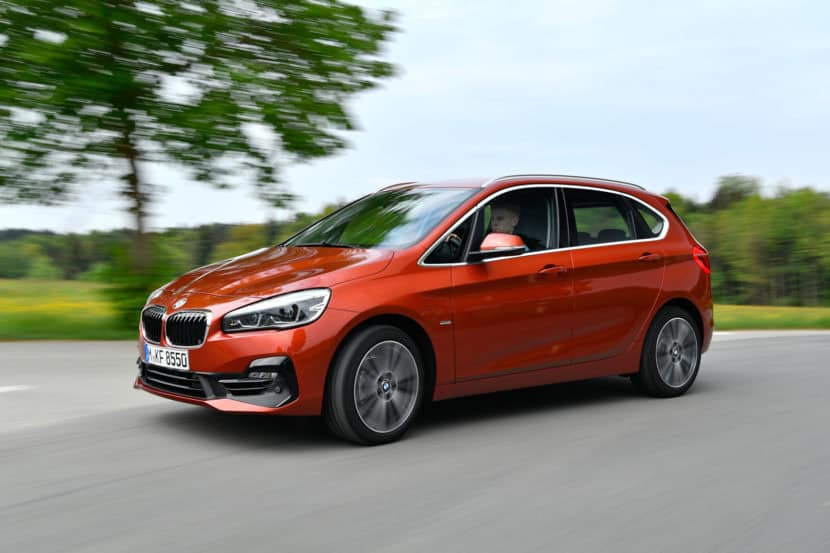
One thing the F45 got that the U06 hasn’t: a facelift. In 2018, BMW refreshed the first generation with slimmer headlights, iDrive 6.0, and revised driver assistance systems. Normal LCI business. The second generation has now passed the four-year mark without one, which is unusual.
What The U06 Offers
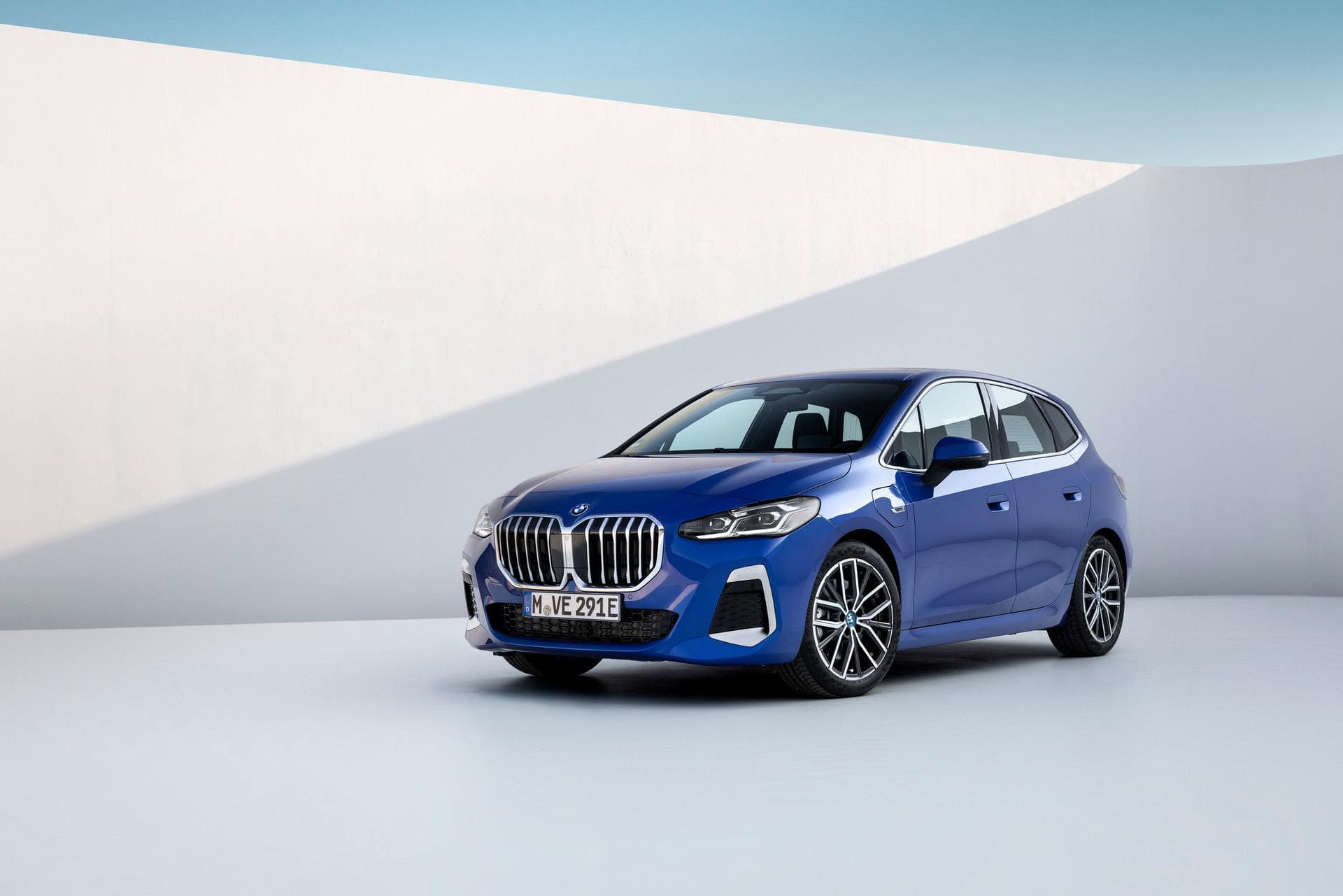
The second-generation Active Tourer debuted in October 2021 and went on sale in Germany in February 2022. It grew slightly over the F45 — 4,386 mm versus 4,352 mm — and moved from the UKL2 platform to BMW’s updated FAAR architecture (Frontantriebsarchitektur Weiterentwicklung, front-wheel-drive further development), the same platform underneath the U11 X1 and U10 X2.
The Gran Tourer didn’t survive to the U06 generation. BMW dropped the seven-seat model, pointing to declining demand for compact three-row MPVs. The U06 is five seats only.
The powertrain lineup covers a fair amount of ground. The 218i starts with a 136 hp 1.5-liter three-cylinder. The 220i gets the same engine plus a mild-hybrid system for 170 hp. The 223i steps up to a 2.0-liter four-cylinder at 218 hp. On the diesel side: the 218d at 150 hp and the 220d as a mild-hybrid version of the same engine. Both plug-in hybrids — the 225e xDrive with around 245 hp and the range-topping 230e xDrive at 326 hp and 477 Nm — offer up to 88 kilometers of claimed electric range. The xDrive variants are all-wheel drive; most others are front-wheel drive.
The U06 was also the first compact BMW to arrive with iDrive 8 and the side-by-side curved display, and the first combustion-engined BMW to launch without the iDrive rotary controller. A first of many similar models to come.
What It Leaves Behind

The Active Tourer never pretended to be something it wasn’t. Top Gear’s review of the current car called it “the odd one out in the BMW family,” which is fair. It doesn’t drive the way BMW enthusiasts expect a BMW to drive. It’s a practical, well-built, reasonably premium family hauler that happens to have a kidney grille on the front. European families bought it for exactly that reason.
What often gets forgotten is what the car made possible. Without the political will inside Munich to build the F45, there’s no front-wheel-drive 1 Series hatchback, no 2 Series Gran Coupe, no current X1 or X2. The Active Tourer was BMW’s real-world test of whether its customers would accept front-wheel drive under a blue-and-white roundel. Most of them did. The SUVs that followed became a massive part of the business.
The Active Tourer will probably go out quietly by the end of this decade. No fanfare, no special edition, no farewell tour. The X1 absorbs whatever demand is left. Most BMW buyers in the United States will still have no idea it existed.