Article Summary
- BMW Brilliance Automotive will reportedly end local production of the iX1, i3 G28, and long-wheelbase i5 in Shenyang this July
- All three models run on BMW’s Gen5 BEV tech and are being cleared to free up capacity for Neue Klasse
- The iX3 L and i3 L — the first China-developed Neue Klasse models — are confirmed for local production at BBA Shenyang
BMW Brilliance Automotive will reportedly end local production of two CLAR-based electric models, and one FAAR, in Shenyang this July. The iX1, the China-spec G28 i3 sedan, and the long-wheelbase i5 are all on the way out, according to an insider report on Weibo cited by CNEVPost. The production capacity they free up is earmarked for Neue Klasse. BMW has not confirmed the timeline officially, but it fits cleanly with what the company has been saying publicly for months: Shenyang is being retooled for Neue Klasse, and something has to leave before the new architecture can arrive.
What Models Are Going Away

Two of the three models in question are all built on CLAR — BMW’s Cluster Architecture, the modular platform that underpins everything from the G20 3 Series to the G05 X5. It was adapted to support battery-electric powertrains for what BMW internally calls its fifth-generation EV technology. That generation is now being superseded.
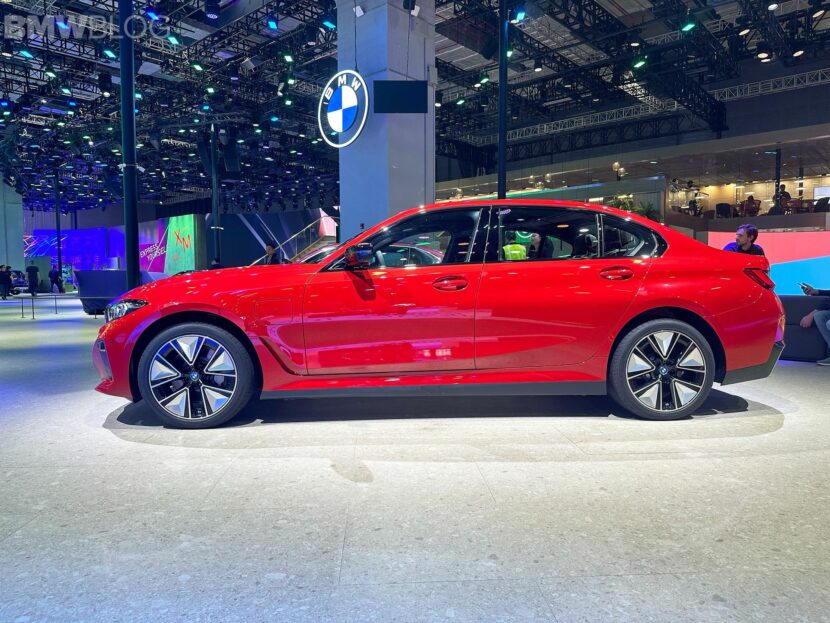
The iX1 long wheelbase is a compact electric SUV that competes in a segment China’s domestic brands have effectively colonized. The i3 sold locally is not the global i3 saloon — it is a battery-electric version of the G20 3 Series, developed specifically for the Chinese market and sold there since 2022 under the internal code G28. The i5 LWB is the long-wheelbase variant of BMW’s mid-size electric sedanon, built in Shenyang for local customers who want more rear legroom than the standard Dingolfing-produced car provides.
None of these are bad vehicles. The i3 G28 in particular has been quietly competent, and there are plenty of reasons to envy Chinese customers who got a long-wheelbase 3-series-based electric sedan that the rest of the world never saw. But all three are generation-five BEVs on a mixed-powertrain platform, and that is the distinction that matters for what comes next.
What’s Coming Next

BMW used Auto China in Beijing earlier this year to debut the iX3 L and i3 L — both long-wheelbase Neue Klasse models developed in China, for China. These are sixth-generation BEVs on a purpose-built electric platform, and they will be assembled by BBA in Shenyang once the production line transitions are complete. The new architecture brings round cells, a new electrical system, and substantially improved software. BMW has also localized the user experience in ways that matter in China: the voice interaction system, for example, uses a solution built with local technology partners including DeepSeek, rather than the Amazon-based setup that ships in European and American cars.
BMW reaffirmed during the celebration of BBA’s seven-millionth vehicle produced at Shenyang that the factory is being upgraded for Neue Klasse. The company described improvements to its AI-powered quality management and digital production network. That upgrade has to happen somewhere, and clearing the CLAR-based EVs off the line is the logical first step.
Not everything electric disappears from China. The i7 is imported rather than locally produced, so it stays unaffected. And the G78 — the long-wheelbase X5 coming to China in both combustion and battery-electric form — is on a separate track.
BMW’s Sales In China Took A Hit
In 2025, BMW delivered 625,527 BMW and MINI vehicles in China. This represented a 12.5% decrease year-over-year, marking the second consecutive year of sales. The company walked back its forecast for the full year after expecting sales to hold at roughly 50,000 units per month at the start of 2026. Consumer demand in China has been soft in ways that are structural, not just cyclical, and the domestic competition is not slowing down.
Retiring the previous-gen EVs is the right call architecturally. Neue Klasse is a more competitive platform in nearly every dimension that matters in the Chinese market: software, range, charging speed, and cost structure. But clearing the line this year means there will be a gap before Shenyang is producing the new models at volume, and BMW cannot afford many gaps right now.
[Source: cnevpost]