This year marks the 140th birthday of BMW’s iconic rival, Mercedes-Benz. It’s a milestones that forces even die-hard BMW loyalists to pause and acknowledge the scale of history involved. Love them or loathe them, you’ve got to admire the fact that Mercedes practically invented the car. No automaker would be where they are today without Karl Benz. And for BMW, whose identity has long been forged in opposition to Stuttgart’s three-pointed star, Mercedes’ anniversary is as much about rivalry as it is about reverence.
BMW, Mercedes-Benz, and How We Got Here

The accepted starting point for Mercedes’ story is 1886, when Karl Benz patented the Benz Patent-Motorwagen, widely regarded as the world’s first true automobile. BMW, by comparison, wouldn’t exist as for another three decades. The brand’s official beginnings trace back to 1910, before a reorganization in 1916 and finally becoming Bayerische Motoren Werke in 1922. It’s also worth noting that cars weren’t BMW’s original bread and butter. It began as an aircraft engine manufacturer before pivoting to motorcycles and, eventually, cars. That difference in origin stories has shaped both brands ever since. Mercedes has always leaned on heritage, gravitas, and technical firsts. Meanwhile, BMW built its reputation by challenging that establishment. The brand’s lighter, sharper, and more driver-focused machines were aimed at people who love to drive, not merely arrive. Later, it leaned into its aviation background, adopting cockpit-like lighting and buttons.
The philosophical divide becomes clear as you examine the brands’ long-running chess match across the luxury and performance spectrum. For decades, Mercedes defined the benchmark for comfort, safety, and engineering prestige. Anti-lock brakes, airbags, crumple zones — Mercedes was often first. BMW responded not by copying, but by reframing the conversation. The E32 and E38 BMW 7 Series didn’t out-S-Class the S-Class; they made executive sedans exciting.
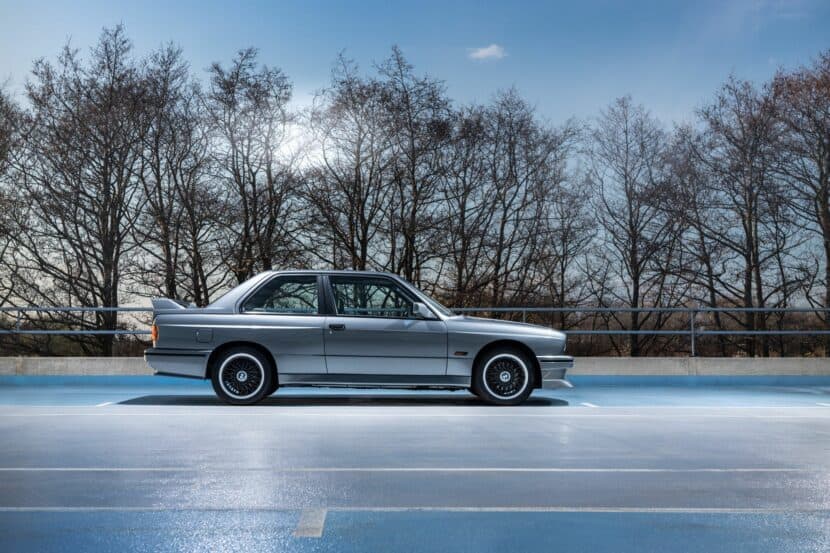
Arguably, the rivalry hit full stride in the 1980s and 1990s, when BMW’s motorsport-bred ethos collided head-on with Mercedes’ growing performance ambitions. The E30 M3 ran circles around everything in touring car racing, even besting Mercedes’ own 190E 2.3-16 and later Evolution models. Stuttgart quietly took notes — it was their turn to reorient. AMG went from a skunkworks tuner to a factory-backed performance arm, and BMW M had a true adversary. The arms race that followed — M5 versus E55 AMG, M3 versus C63 — defined modern German performance cars and elevated both brands in the process.
The Best is Yet to Come — For Both Brands

At 140 years old, Mercedes is also a reminder that BMW’s golden eras often came when it had something to push against. Without rivals, including Mercedes, as the foil, BMW’s “Ultimate Driving Machine” mantra wouldn’t resonate nearly as strongly. Even today, as both brands wrestle with electrification, software-defined vehicles, and increasingly blurred model lines, the dynamic remains familiar. Mercedes leads with sometimes bizarre spectacle and tech-forward luxury. BMW counters with chassis tuning, balance, and driver engagement — even when electrons replace cylinders.
Of course Mercedes-Benz turning 140 deserves recognition. Not because BMW fans suddenly need to wave a three-pointed star, but because the brand’s longevity underscores how essential this rivalry has been to automotive progress. BMW grew up alongside and because of Mercedes-Benz. And as the next era of mobility unfolds, one thing feels reassuringly constant: Munich and Stuttgart will still be measuring themselves against each other, just as they have for well over a century.