Article Summary
- BMW is sticking with its global approach by selling gasoline, diesel, plug-in hybrid, and EVs to cater to all needs.
- It hasn’t set an end date for cars with combustion engines.
- Hydrogen will join the lineup in 2028 for the next-generation X5.
Say what you will about BMW, but it does sell just about everything you could possibly want. From diesel hatchbacks to full-size gasoline SUVs, there’s something for everyone. The manual gearbox is still alive, even as the EV expansion is in full swing with Neue Klasse. Plus, a hydrogen-production vehicle is on the way, set to launch in 2028 for the fifth-generation X5 lineup.
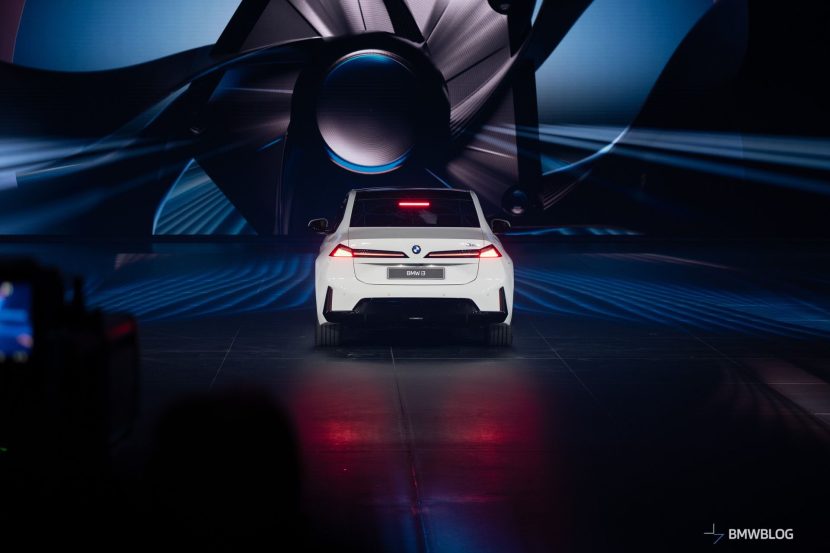
The “Power of Choice” slogan is more than just marketing fluff. BMW is standing by those words with a rich drivetrain mix. At the i3 sedan’s reveal this week in Munich, we caught up with the company’s product chief. Bernd Körber reinforced the company’s flexibility in powertrain options.
“We think in a continuum, and we still think there’s basically three, four global car manufacturers still remaining. We are one of them. All the others have a regional focus. That’s why their strategy is different. If you want to be a global car manufacturer, you have to have everything. That’s the ambition, because the world has everything.”

“There are markets that are 100% EV by now, like Iceland and Norway. There are markets that are 0% EV. There are markets where there are 50% diesel. There are markets that are 70% PHEV. So, our logic is global relevance: you have to have all technologies. And because of that, we don’t have an end date to anything in our planning.”
This never-ending effort to cater to all needs may lead to further expansion of an already highly complex lineup. BMW is considering an SUV larger than the X7, and an electric sports car is not entirely out of the question either. It has also been increasing the availability of long-wheelbase sedans and SUVs outside of China.
Elsewhere, it has brought wagons back to America after a multi-year hiatus, albeit only with the high-priced M5 Touring. A cheaper product might be on the way, as the next 3 Series Touring could come to the United States with gasoline and/or electric drivetrains. Whether it’ll be a gas-fueled “G51” or an electric “NA1” is up in the air. Either way, we’re happy to hear BMW is committing to a new generation of its smaller estate in an increasingly SUV-dominated automotive industry.
While most car brands prematurely set end dates for combustion engines, only to pull back on those promises years later, BMW never claimed it would go exclusively electric in X years. Instead, there is a strategic target to have EVs account for 50% of the Group’s total sales by 2030. Munich remains realistic and projects it won’t see a uniform adoption rate, as some markets will be higher than others.
On the road to electrification, it’s business as usual. Take, for example, the new X5 debuting this summer. The “G65” will have inline-six gasoline and diesel engines, a powerful V8, a frugal plug-in hybrid, and a battery-powered iX5. It won’t be long before BMW starts selling performance EVs as full-fledged M models, filling just about every niche you could think of.
Well, not quite everything. The manual transmission is living on borrowed time, and BMW isn’t committing to replacing the Z4 or 8 Series. A supercar is still missing in action, and some current models aren’t sold everywhere. Nevertheless, the lineup ticks nearly all the boxes, and there may even be an adventure vehicle one day.