Article Summary
- AC Schnitzer will wind down manufacturing and tuning operations by the end of 2026, with the KOHL Group in talks to sell the brand name while existing inventory sells through year’s end.
- Germany’s slow parts approval process left ACS up to nine months behind non-German competitors on new model support — a structural disadvantage that no amount of engineering quality could fix.
- A combination of global economic headwinds, the phaseout of the combustion engine, and a younger generation that never connected with tuning culture the way their parents did made the business increasingly unviable.
AC Schnitzer will stop tuning BMWs at the end of 2026. That’s nearly four decades gone — a story that started in 1987 with a modified E32 7 Series, and ends with a press release about regulatory timelines and exchange rates.
According to the company’s managing director, Rainer Vogel, Germany’s parts approval process is slow — so slow that ACS can’t get aftermarket components to market until eight or nine months after competitors in other countries. “If we can only bring aftermarket parts to market eight or nine months after the competition, that speaks for itself,” he said. It does. When a new BMW model launches, the window to capture enthusiast buyers is narrow. By the time a German tuner clears its paperwork, the customer has already bought something else or moved on.
The rest of the list will sound familiar to anyone who’s followed European manufacturing in recent years: U.S. tariffs, rising raw material costs, volatile exchange rates, suppliers going under. The domestic German market has contracted too, weighed down by four years of economic uncertainty that have made discretionary spending on performance parts a harder sell. Vogel frames the closure as a rational decision made in the interest of the broader KOHL Group — the family-owned parent company founded by Willi Kohl, who co-created ACS alongside Herbert Schnitzer back in 1987 in Aachen. That’s where the “AC” comes from, which not everyone remembers.
What AC Schnitzer Actually Was

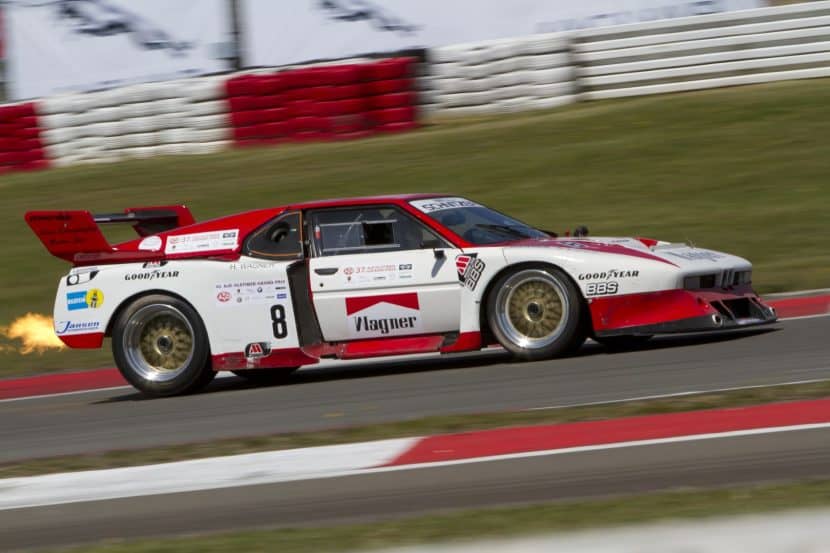
It’s worth being specific, because “BMW tuner” undersells what ACS built over 39 years. The company raced touring cars in the original Deutsche Tourenwagen Meisterschaft with E30 M3s during the late 1980s and into the 1990s — a period when the DTM was genuinely one of the best racing series in the world and the E30 M3 was the car to have.
ACS-prepared machines were fixtures on the grid, and the program helped cement the E30 M3’s reputation as one of the defining cars of its era. The company also ran endurance programs at the Nürburgring, which is a different kind of test altogether — 24 hours on the Nordschleife rewards durability and engineering discipline in ways that circuit racing doesn’t, and ACS turned up there consistently.

Beyond racing, ACS set outright speed records. A modified E63 M6 showed what BMW’s S85 V10 could do with some careful attention, and there was also a record run with an LPG-powered 335i — an unlikely project that demonstrated the company’s willingness to go sideways from the obvious. When MINI joined the BMW family, ACS extended its program to cover those cars. When the GR Supra arrived as a BMW-Toyota joint venture, they tuned that too. At various points the company even worked on Range Rovers.
The product range itself was comprehensive in a way that cheaper tuners weren’t. Engine tuning, exhaust systems, suspension upgrades, aerodynamic bodywork, and those forged wheels — which became probably the most recognizable visual signature of the brand over the years. The whole package was engineered together, not assembled from a parts bin.
BMW’s Role in All of This
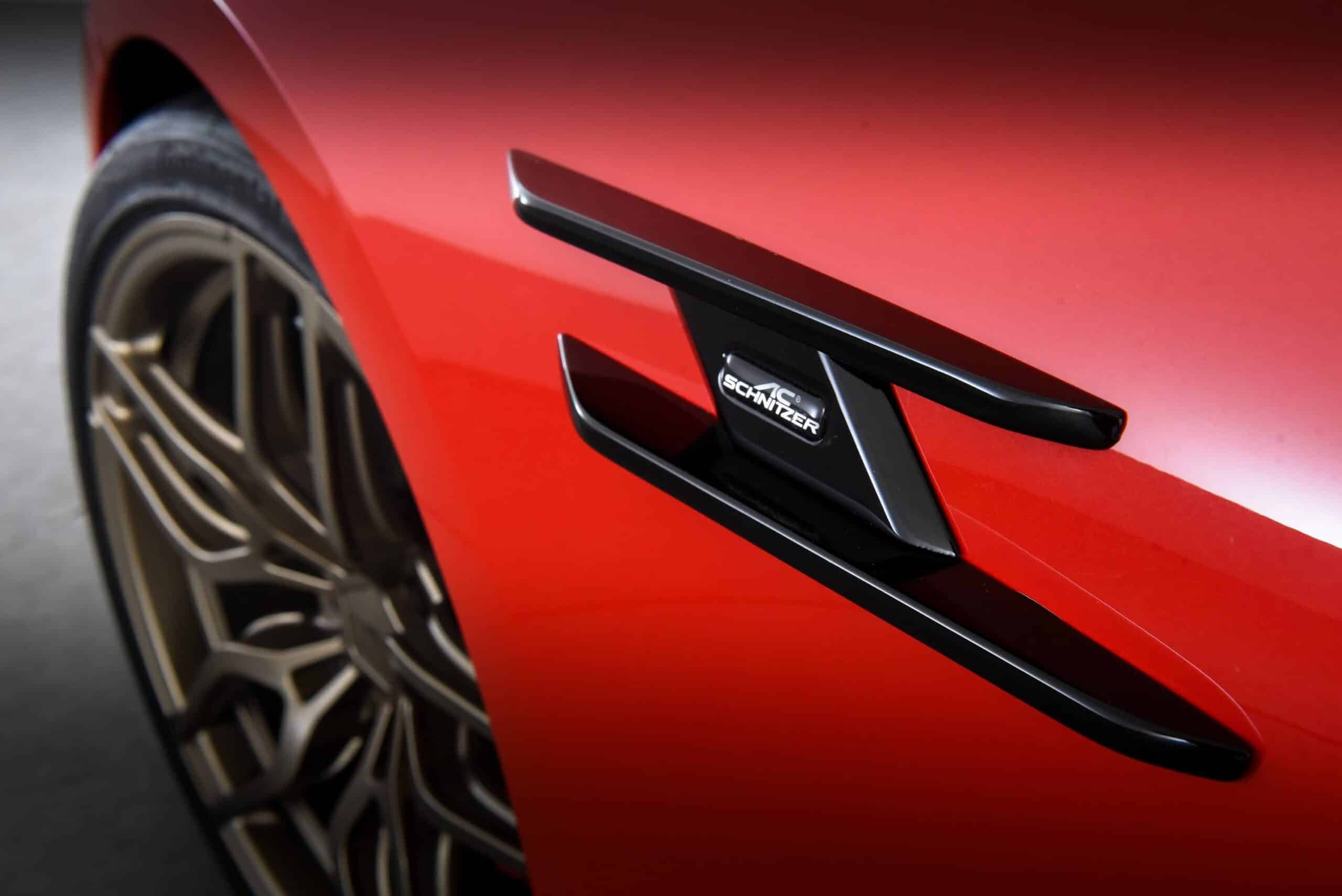
BMW’s relationship with ACS was always a bit of a knowing wink. Officially independent, but ACS parts were sold through BMW dealerships in multiple markets for years. BMW got to offer customers performance and styling upgrades without having to develop or warranty them in-house; ACS got access to the showroom floor and an implicit endorsement from the manufacturer. For a premium aftermarket brand, that kind of legitimacy is hard to buy any other way.
Tougher To Engage The Young Generation
The more uncomfortable admission in Vogel’s statement is the generational one. “We have not succeeded in inspiring young customers to enjoy sporty driving with our brand to the same extent as their fathers’ generation did,” he said.
That’s true, but it’s not really a brand problem and it’s not really a marketing problem. Car culture as it existed from the 1980s through the early 2000s was built around a specific set of circumstances — affordable performance cars, accessible motorsport, a media ecosystem of magazines and TV programs that treated driving as something worth caring about — and most of those circumstances no longer exist in the same form. Trade show attendance in the tuning industry remains strong, which suggests the interest hasn’t completely disappeared. But there’s a gap between showing up at a show and actually buying a suspension kit.
Then there’s the combustion engine question, which hangs over everything. Traditional performance tuning — more power, better exhaust note, sharper throttle response — is built around what internal combustion does. As electrification accelerates, that whole vocabulary becomes less relevant. ACS has worked with hybrid BMWs, but it’s a different proposition, and the community of buyers willing to spend money modifying an EV is, for now, much smaller.
What Happens Next

The KOHL Group is talking to potential buyers for the AC Schnitzer name. The brand has enough global recognition that a sale is plausible, though what an acquired ACS would actually look like is anyone’s guess.
Whatever happens with those talks, existing inventory sells through the end of 2026 — wheels, exhaust systems, suspension kits, aero parts, engine tuning across BMW and MINI model lines — with full warranty and after-sales support guaranteed by KOHL beyond year’s end. For longtime fans and the international dealer network, it’s a genuine last call rather than a clearance event.
“Making a rational decision regarding a business segment that is so emotionally charged is not easy,” Vogel said. That comes through in how the company has communicated this. There’s no spin here, no announcement dressed up as a pivot. Just a family business that built something real over four decades, ran the numbers, and made a hard call.